The beauty of sex is that it looks different for everyone. Pleasure is all about exploring what feels good to you, whether that's with toys, partner(s), or solo. It can also mean exploring new fetishes and kinks, and if that's what brought you here: I'm glad you landed.
Maybe you came here after a conversation with a partner and are looking for somewhere to start your journey. Maybe you've been in the scene for years and you just want a resource you can actually send to someone without cringing at the tone. Whatever the reason, you're in the right place.
This guide exists because most BDSM content online falls into one of two camps. There's the clinical kind, technically accurate and emotionally sterile, written like a pamphlet you'd find in a waiting room. And then there's the other kind, which gets the vibe right but skips the stuff that actually keeps people safe and confident. HoneyWhippedFeta is neither of those things. This is frank, community-rooted, and written from inside the culture rather than at arm's length from it.
A quick note on who this is for: everyone. BDSM and kink aren't niche interests belonging to a specific type of person. They exist across orientations, relationship structures, gender identities, and experience levels. This guide is written with a Queer lens, because that's the lens I write from, but nothing here requires you to be Queer to find it useful. The fundamentals of consent, communication, and care apply regardless of who you are or who you're playing with.
Whether you've never tried anything outside of "vanilla" sex or you're looking to deepen what you already know, start wherever makes sense for you. The table of contents below will help you jump around.
In this guide:
BDSM vs. kink — what's the difference?

What is BDSM?
BDSM is an acronym that covers a lot of ground. It stands for Bondage and Discipline, Dominance and Submission, and Sadism and Masochism. Three overlapping categories of practice that get bundled together because they share a common thread: intentional, consensual power and sensation. Here's what that actually means in plain language.
Bondage and Discipline refers to physical restraint — rope, cuffs, tape, cage, whatever creative reasoning you can imagine — and the use of rules, protocols, and consequences to establish structure in a dynamic.
Dominance and Submission is about power exchange. One person takes the lead and another yields it, or if you like a little playfulness, there’s a fun back and forth, consensually and intentionally. This can be contained to a single session or extend into an ongoing dynamic that shapes daily life.
Sadism and Masochism describes the giving and receiving of pain or intensity for pleasure. Impact play, sensation play, and temperature play all live here. The key is that both parties are choosing it and getting something from it.
What BDSM is not is abuse, coercion, or anything nonconsensual. This distinction matters enough to state directly: the presence of pain, power imbalance, or restraint in a scene does not make it abusive. The absence of genuine, ongoing consent is what makes something abusive.
One more thing worth saying upfront, you don't have to be into all of it. BDSM is a spectrum, not a rigid checklist. Some people are deeply into bondage and have no interest in pain. Some people love the D/s dynamic in a relationship but never incorporate physical restraint. You get to take what resonates and leave the rest. How hot is that?!

BDSM vs. kink — what's the difference?
You'll hear these words used interchangeably, and for casual conversation that's fine, hell I use them interchangeably all the time. But technically they're not the same thing, and understanding the distinction helps you navigate both the community and your own interests more clearly.
Kink is the broader umbrella. It refers to any sexual interest, practice, or dynamic that falls outside what's considered conventional, which is honestly a pretty arbitrary line that shifts depending on who's drawing it. Kink can include BDSM, but it also includes role play, specific fetishes, voyeurism, exhibitionism, and plenty of other things that don't involve power exchange or pain at all.
BDSM is a specific set of practices and dynamics that live within the kink umbrella. Not all kink is BDSM, but all BDSM is kink.
Then there's fetish, which gets conflated with both. A fetish is a specific fixation, often centered on an object or body part, that plays a significant role in someone's arousal. Feet, leather, latex, heels, hair, cigarettes, particular fabrics. A fetish can be part of a kink practice or exist entirely on its own. Listen, there's probably a fetish for just about everything. When it comes to being a freak, the sky's the limit.
None of these categories are rigid, and most people's interests don't fit neatly into one box. The point isn't to label yourself correctly. It's to have language that helps you figure out what you actually want and communicate it to the people you're with. I also find that interests can come and go with seasons of life, dynamics, partners, and through exploration. They don't always have to feel permanent to every dynamic or click into every relationship.

Power structures and dynamics
If there's one concept that sits at the heart of BDSM, it's power exchange — the intentional, consensual transfer of control from one person to another. Candidly, I think this is perhaps the most misunderstood part of BDSM, and where things can really break down if people aren't honest about their desires, and even the power dynamics that already exist within their own identities. It's easy to gloss over, and it often takes real time to get familiar with. It's also worth noting — and we'll explore this more later — how complicated and often misleading the portrayal of these dynamics is in mainstream media and pornography. With that, here's a breakdown of some of the dynamics you'll encounter.
Dominants, submissives, and switches
The most common framework you'll see is dominant and submissive, often shortened to dom and sub, or D/s. The dominant is the person who holds control in a dynamic. In most dynamics, they direct the scene after both parties have mutually agreed on boundaries and limits. The submissive is the person who yields that control, not because they're passive or powerless, but because they've chosen to hand it over.
This is worth sitting with for a second, because it's where a lot of outsider misconceptions live. Submission is not weakness. The submissive in a scene often holds enormous influence over what happens. They set the limits, they hold the safe word, and in a real sense the entire dynamic exists to serve their experience as much as the dominant's. The power exchange is mutual by design.
A switch is someone who moves between dominant and submissive roles, with the same partner at different times or with different partners entirely. Switching is incredibly common and often goes underdiscussed in beginner content, possibly because it doesn't fit the tidy binary. If you're drawn to both sides of the dynamic, that's hot.
Tops and bottoms
Related but not identical to dom/sub is the top and bottom distinction. A top is the person doing — the one wielding the flogger, administering the sensation, taking the active role. A bottom is the person receiving. These are often but not always the same as dominant and submissive. It's entirely possible to be a dominant bottom, as is sometimes the case with female dominants who have their submissives service them.
You could also top from the bottom, which means adopting the receiving position while directing the scene or play with the energy of a top. Then there are service tops, who perform acts at the bottom's discretion. And of course within all of this there are switches, who are just multi-hyphenated talent, naturally.
Masters, slaves, and TPE
At the more structured end of the spectrum is Master/slave (M/s) and total power exchange (TPE) — dynamics in which the power transfer extends well beyond individual scenes and into everyday life. This might mean a submissive partner follows specific protocols, has their decisions guided by their dominant, or maintains a role continuously rather than situationally. TPE dynamics require exceptional communication, trust, and ongoing negotiation. They're not for everyone, but they exist on the same continuum as lighter D/s, just further along it.

The politics of power exchange
Power dynamics in BDSM don't exist in a vacuum. So often, they reflect what we see in larger society — and I think it's genuinely important to acknowledge the privilege and social power you bring into a scene from the outside world. If you're playing in a dynamic across different genders, for example, there's an inherent power structure that already exists before anyone even locks eyes. A male dominant with a female submissive carries the weight of how society has historically socialized women to be deferential to men. That context doesn't disappear when you enter a scene, which is part of why it's worth naming. It's also part of what makes female domination so deliciously subversive. These dynamics also show up across race, age, physical ability, and size. What exists in the outside world comes into the room with you, and that deserves acknowledgment.
Skill difference is another one worth naming. If a newer submissive is playing with a more experienced dominant, that experience gap is a form of privilege. A good dominant recognizes that and adjusts — going back to basics, not assuming shared knowledge, holding space for someone who is still learning. And perhaps most importantly, committing to learning more, and not assuming they know best. Playing ethically isn't possible without at least being willing to notice the political and power dynamics at play and to pause and investigate if something feels off.

A note on Queer BDSM
There's a tendency, I think, for queer people to assume that the more toxic dynamics that appear in mainstream BDSM, particularly the trope of the overbearing male dom and the passive female sub, can't exist in queer spaces. They can. Queerness doesn't automatically dismantle those patterns. What queer BDSM does offer, at its best, is the possibility of a world where those dynamics get genuinely examined and reimagined. Queer kink spaces can be extraordinarily powerful precisely because they're not beholden to the script.
There's also a deep historical connection between BDSM and queer community that deserves its own conversation, one rooted in organizing, solidarity, and community building, not just sex. The two have always been intertwined. That history matters, and it shapes the culture in ways that are worth understanding.

Consent and negotiation
If there's one thing that separates BDSM from harm, it's consent. Not consent as a checkbox or a formality, but consent as an ongoing, active, enthusiastic practice that runs through every part of a dynamic — before, during, and after a scene. Consent can also be revoked at any time.
You might also come across consensual non-consent, or CNC, which looks a bit different for everyone but generally describes a negotiated scene in which one person agrees to simulate non-consent as a form of play. This might look like role play, resistance scenes, or dynamics where a submissive has pre-agreed to have certain decisions made for them without in-the-moment negotiation. The word "consensual" in CNC is doing a lot of heavy lifting — the entire framework depends on extensive negotiation before anything begins, precise limits, and an ironclad safe word system.
It's also worth saying that CNC is considered advanced play for a reason. It requires a high level of trust, self-knowledge, and communication between partners. If you're new to BDSM, it's worth building experience with more straightforward dynamics before exploring this one. And even for experienced players, ongoing check-ins and thorough aftercare are non-negotiable here.
Hard limits and soft limits
A hard limit is a non-negotiable. Something you will not do under any circumstances, full stop. Hard limits don't require explanation or justification. Although I do think it’s important to talk to a partner about why these limits might echist for you, as they could potentially become triggering in a scene.
A soft limit is something you're uncertain about, nervous about, or not ready for yet. Soft limits aren't a yes, but they're not a permanent no either. They might shift with trust, experience, or the right partner. They should only ever be approached carefully and with explicit conversation, never assumed or pushed.
Knowing your own limits before you enter a scene is part of the work of being a good partner, on either side of the dynamic.
Safe words and signals
A safe word is a word or phrase that any person in a scene can use to pause or stop play immediately, no questions asked. The most common system is the traffic light: red to stop everything, yellow to slow down or check in, green to continue.
A few things worth noting. Safe words aren't just for submissives. Dominants and tops use them too, and a good dynamic normalizes that from the start. Safe words also aren't a failure or a dramatic moment. Using one is the system working exactly as it should.
For scenes that involve gags, restraints, or any situation where verbal communication isn't possible, establish a non-verbal signal beforehand. Dropping an object, a specific number of taps, a hand signal. Whatever is clear and easy to execute under pressure. As you become more familiar with scene partners it’s entirely possible that you will learn to read nonverbal cues when someone is nearing fatigue, overwhelm, and anything in between.
The yes/no/maybe list
One of the most practical tools in the BDSM toolkit is the yes/no/maybe list — a structured way to survey your own interests and limits before negotiating with a partner. You go through a list of practices and mark each one as yes (interested), no (hard limit), or maybe (curious but uncertain). Then you compare lists with your partner and build from what overlaps.
It sounds clinical but it genuinely isn't. It's often one of the more illuminating conversations you can have with someone, and it removes a lot of the pressure of having to articulate everything spontaneously in the moment. We have a full guide to the yes/no/maybe list linked in the resources section.
What scene negotiation actually looks like
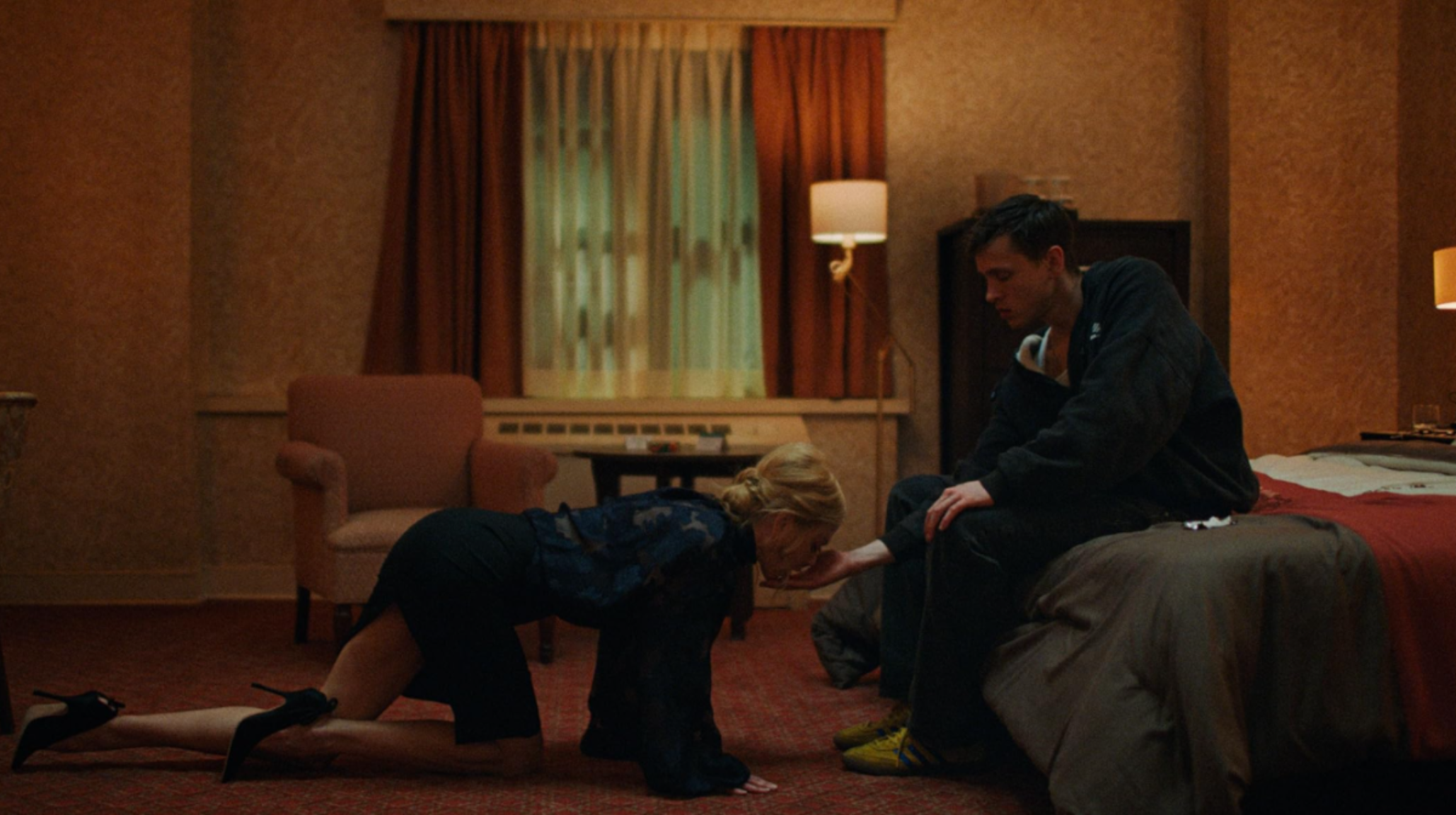
Negotiation is the conversation you have before a scene where you establish what's on the table, what isn't, what your safe words are, and what aftercare will look like afterward. It doesn't have to be formal or stiff. It can happen over dinner, in a text thread, or in the ten minutes before you start. What matters is that it happens.
A basic negotiation covers what you each want from the scene, your hard and soft limits, safe words and signals, any physical considerations worth knowing about, and aftercare needs. The more trust you build with a partner over time, the more fluid this becomes. But especially with someone new, don't skip it.
Negotiation can also look a lot like planning, which I think is especially helpful when playing with someone new or for people who have experienced trauma. This can literally mean a play-by-play of the scene: this happens first, then that, then this. Knowing the shape of what's coming creates safety, and safety is what makes the good stuff possible.

Common practices
BDSM encompasses a wide range of practices, and no two people's version of it looks exactly the same. What follows is a survey, not a how-to. Each of these areas has its own depth, its own community, and its own dedicated guide worth reading before you dive in.
Bondage
Bondage involves the restraint of a partner using rope, cuffs, tape, chain, or other tools. It's one of the most widely practiced areas of BDSM, partly because it has a low barrier to start and a high ceiling for complexity. Rope bondage in particular has its own culture and aesthetic, with Japanese-influenced Shibari being one of the most recognizable styles.
Safety considerations include circulation, nerve pressure, and always having a way to get someone out of a restraint quickly. Before playing with any restraints it's important to familiarize yourself with the specific safety considerations for whatever you're using. Bondage gets marketed as beginner friendly pretty often, and I don't find that to be entirely true. There's a lot that can go wrong without proper care and knowledge. If you're interested in exploring it, a workshop is always a great place to start. Most local sex stores and dungeons offer some form of bondage or rope instruction, and learning in person from someone experienced is genuinely worth it.
Impact play
Impact play covers any form of consensual striking, including spanking, flogging, paddling, caning, and punching. The intensity ranges from light and playful to heavy and ritualistic. Different implements produce very different sensations and carry different risks, and learning the safe zones of the body is essential before picking anything up. The back of the thighs and the fleshy part of the backside are generally considered safer targets. The kidneys, spine, and joints are not.
Sensation play
Sensation play is about engaging the nervous system through texture, temperature, and contrast. This might look like ice and heat, feathers and scratching, blindfolds to heighten other senses, or wax play. Sensory deprivation, where one or more senses are removed to intensify others, also falls in here. It tends to be a gentler entry point for people who are curious about BDSM but not drawn to impact or restraint.
Dominance and submission dynamics
D/s as a practice rather than just a framework can range from a single scene to a lifestyle dynamic. Protocols, rituals, collaring, and service are all ways that D/s dynamics get expressed outside of explicit scenes. Some people maintain a D/s dynamic twenty-four hours a day. Others drop into it situationally. There's no right way to structure it as long as everyone involved has agreed to the terms.
Collaring is one of the more significant rituals in D/s culture and worth understanding on its own. A collar is a physical object, often worn around the neck, that symbolizes the bond between a dominant and a submissive. Depending on the dynamic, it can carry weight similar to a relationship commitment, and in some communities it's treated with the same seriousness as an engagement or marriage. There are different types of collars that tend to mark different stages of a dynamic.
Not every D/s relationship involves collaring, and not everyone assigns the same meaning to it. For some people it's deeply ceremonial. For others it's more casual. What matters is that both people are clear on what it means in their specific dynamic.
Praise and humiliation play
Two sides of the same coin. Praise play centers affirmation, worship, and adoration as erotic acts. Humiliation play uses degradation, name-calling, and embarrassment as a form of power exchange. Both are entirely psychological and require careful negotiation because what reads as hot to one person can be genuinely harmful to another. The line between erotic humiliation and actual harm is consent, context, and a solid understanding of your partner's relationship with the language being used.
Role play
Role play in BDSM context often intersects with power dynamics. Common archetypes include authority figures, strangers, age dynamics, and pet play. The specifics matter less than the principle: you're both playing characters within a negotiated scene, and the ability to step out of the scene when needed is always available.
Edge play
Edge play is a catch-all term for practices that carry higher physical or psychological risk. Breath play, knife play, fire play, and heavy psychological scenes fall into this category. This guide isn't going to walk you through any of them in detail, because edge play genuinely requires in-person education, experienced mentorship, and a level of trust and communication that takes time to build. If you're curious, seek out community resources and educators rather than learning from content alone.

The art of bratting
If submission is about yielding control, bratting is about making your dominant work for it. A brat is a submissive who resists, talks back, breaks rules, and generally causes delightful trouble — not because they don't want to submit, but because the push and pull is part of the fun. The chase is the point. Think of it less as disobedience and more as a very specific flavor of power exchange where the submission has to be earned rather than simply given.
It's worth saying that not every dominant wants to engage with a brat, and that's completely valid. Brat taming, as it's sometimes called, requires patience, creativity, and a particular kind of energy that not everyone has or wants to bring to a scene. A brat paired with a dominant who doesn't enjoy that dynamic is a frustrating mismatch for everyone. Knowing whether you're a brat and finding partners who genuinely enjoy that flavor of play is part of the compatibility conversation.
A few things to keep in mind if bratting resonates with you. It still requires negotiation. Your dominant needs to know that resistance is part of your play style before the scene starts, not discover it mid-scene with no context. The bratting is consensual misbehavior, not a surprise. Safe words still apply. And aftercare matters here too, especially if the dynamic gets emotionally intense or if a scene involves any kind of punishment as part of the brat taming. Oh and if your looking for a way to really twist your brats brain….I’ve got some recommendations.

The emotions of BDSM
BDSM is physical, yes. But it's also one of the more emotionally complex spaces you can enter, and that part doesn't get talked about enough in beginner content. The intensity of a scene, the vulnerability of submission, the responsibility of dominance, the trust required for any of it to work — all of that lands somewhere emotionally, and knowing what to expect makes you a better partner and a more grounded participant.
Subspace and domspace
During an intense scene, both the submissive and the dominant can enter altered psychological states that the community refers to as subspace and domspace.
Subspace is probably the more widely discussed of the two. It describes a floaty, dissociative, deeply relaxed state that submissives sometimes enter during play, driven in part by the release of adrenaline and endorphins. It can feel euphoric, dreamlike, or emotionally raw. Some people cry in subspace without fully understanding why. Some feel profoundly safe. Some feel almost nothing and float. It looks different for everyone, and it can arrive suddenly or build gradually over the course of a scene.
Domspace is the less discussed counterpart. Dominants can enter a focused, heightened state of their own, one that feels charged and controlled and deeply present. It can also carry its own emotional weight, particularly when a dominant is holding a lot of responsibility for another person's experience.
Vulnerability and trust
BDSM asks a lot of people emotionally. A submissive is being asked to hand control to another person, which requires a level of trust that doesn't come from nowhere. A dominant is being asked to hold that trust carefully, which is its own kind of pressure. Both sides require vulnerability, even if it looks different depending on the role.
This is part of why BDSM can feel so intense and so connecting when it goes well, and so destabilizing when it doesn't. The emotional stakes are real. Treating them as real, rather than pretending a scene is purely physical, is part of what makes someone genuinely good at this.
When complicated feelings come up
It's entirely normal to feel unexpected emotions during or after a scene. Crying is common. So is laughter. So is a sudden wave of grief or tenderness or anger that doesn't seem to have an obvious source. The intensity of the experience can unlock things that were sitting beneath the surface, and that's not always predictable.
If you're playing with someone who carries trauma, or if you carry trauma yourself, this is worth naming in negotiation. Not because BDSM is inherently unsafe for people with trauma histories, but because certain dynamics, language, or physical experiences can be triggering in ways that aren't always anticipated. Knowing that going in, and having a plan for how to handle it if it comes up, is part of caring for yourself and your partner.
The emotional labor of dominance
Dominants carry more emotional labor in a scene than they often get credit for. Holding someone's safety, reading their state in real time, making decisions under pressure, and managing your own internal experience simultaneously is genuinely demanding. The image of the effortlessly in-control dominant is a fantasy. Real dominance requires attention, empathy, and a lot of emotional bandwidth.
If you're exploring dominance, give yourself permission to find it hard sometimes. Debrief with your partner after scenes. Check in with yourself. Most importantly, find a style that works for you. Dominance can look different for everyone, and so often it gets shaped by traditional masculinity without anyone really questioning it. But one of the potentially exciting things about BDSM is that it can actively challenge what dominance is supposed to look like, creating space for something entirely new. You don't need to subscribe to what everyone else is doing. The best dominants tend to be the ones who figured out their own version of it.

How to get started
So you've read through the frameworks, the dynamics, the practices, and the emotional landscape. Now the practical question: how do you actually begin?
The honest answer is that there's no single right entry point. Some people start with a conversation with a partner. Some start alone, figuring out what they're drawn to before bringing anyone else into it. Some stumble into a community first and learn from being around people who've been doing this longer. All of those are valid. What matters is that you start with intention rather than impulse.
Start with yourself
Before you bring another person into any of this, spend some time getting clear on what you actually want. The BDSM test is a widely used online tool that gives you a breakdown of where your interests tend to land across a range of dynamics and practices. It's not gospel, but it's a useful starting point for putting language to things you might only have a vague sense of. The yes/no/maybe list is another good solo exercise. Go through it alone first, before you do it with a partner.
Journaling helps too, if that's something you do. What scenarios do you find yourself drawn to? What roles feel resonant? What makes you nervous in a way that might actually be excitement? Getting honest with yourself first makes every conversation that comes after easier.
The conversation with a partner
Bringing up kink with a partner for the first time can feel vulnerable, and that's normal. A few things that help: pick a neutral moment, not in the middle of sex, not right after a fight. Frame it as curiosity rather than a demand. "I've been thinking about exploring this and wanted to talk about it with you" lands differently than "I want to try this." Be prepared for any response, including a no, and have a sense of what a no means for you before you have the conversation.
Start small
Whatever area of BDSM interests you, there is a version of it that is low stakes enough to start with. Curious about impact play? Start with a hand. Interested in restraint? Try holding someone's wrists before investing in rope. Drawn to D/s dynamics? Experiment with giving or following an instruction in a low-pressure context before building elaborate protocols.
The culture of going bigger and more intense faster is real in some corners of BDSM, and it's worth resisting. Starting small isn't timid. It's how you actually figure out what you like, build trust with a partner, and stay safe while you're learning.
Finding gear
You don't need much to start. A blindfold, a pair of soft restraints, a basic impact implement — none of these require significant investment. As you figure out what you're actually into, you can build from there. When it comes to gear, quality matters more than quantity, especially for anything involving restraint or impact. Here’s a harness guide with some of my favorite brands!
Finding community
One of the best things you can do as someone new to BDSM is find people who've been doing it longer and are willing to share what they know. Munches are a great starting point — they're casual, public, social meetups for people in the kink community, with no play involved. Just people getting food and talking. They exist in most cities and are specifically welcoming to newcomers.
Online communities can also be useful for learning, particularly forums and spaces where education is prioritized over performance. Just be discerning about who you're taking advice from and remember that the internet contains a lot of confident people who are wrong.

Consider working with a professional dominant
There are a lot of professional dominants out there who offer more than just sessions. Many provide consultations, intake conversations, or low-stakes meetings specifically designed to help newcomers figure out what they're interested in, what play could look like for them, and how to start communicating that with future partners. This can happen in person or digitally, depending on the provider.
What makes this a genuinely useful option is that professional dominants do this for a living. They've seen a lot, they know how to ask the right questions, and they're often much better equipped than a new partner to help you articulate what you want and what you're not sure about yet. Most will do some form of screening or intake before working with you, which is standard practice and worth respecting.
A few things to keep in mind. Be respectful of their time, be clear about what you're looking for, and pay what they charge without negotiation. This is their profession.
It's also worth knowing that professional dominants often offer services for people interested in the dominant side of things too. If you're looking to develop your skills, plenty of providers offer private instruction in specific practices like bondage, restraint, or psychological play, as well as more structured courses. Think of it less like a session and more like finding a really knowledgeable mentor. It's all about finding someone whose approach connects with what you're trying to learn.

Aftercare
Aftercare is the care that happens after a scene ends. It's not optional, it's not an afterthought, and it's not only for submissives. It's the part of BDSM that closes the loop on everything that just happened, physically and emotionally, and it's one of the most important things you can learn to do well.
Here's why it matters physiologically. During an intense scene, your body releases a significant cocktail of adrenaline, endorphins, and other neurochemicals. When the scene ends, those levels drop. For some people that drop is gentle. For others it's sharp and disorienting, arriving during the scene, hours later, or even a day or two afterward. This is what the community calls drop, and understanding it changes how you think about aftercare entirely.
What aftercare actually looks like
Aftercare looks different for everyone and the only way to know what someone needs is to ask, ideally before the scene starts rather than after. Some common forms include physical comfort like cuddling, blankets, and warmth. Hydration and snacks, because intense scenes are physically taxing. Verbal reassurance and affirmation. Quiet time with no pressure to talk or process immediately. A shower together. Watching something familiar and low-stakes. Even if that’s a rewatch of Scary Island. Sometimes it's all of the above and sometimes it's just lying in the same room and not being alone.
For scenes that were particularly intense, emotionally charged, or that involved humiliation or degradation, verbal aftercare is especially important. Coming back to each other as equals, affirming care and respect, and gently closing the dynamic of the scene matters more than people sometimes realize.
Aftercare for long distance and solo play
If you're playing with someone remotely, aftercare still applies. A phone call, a text check-in, knowing someone is going to reach out afterward. It's worth building into the plan before the scene rather than hoping it happens organically.
If you're exploring kink solo, self-aftercare is a real thing. Having a plan for how you're going to take care of yourself after an intense experience, whether that's a bath, a snack, a comfort show, or just time to decompress, is part of responsible solo play.
The check-in
Beyond immediate aftercare, a check-in the following day is good practice, especially with a new partner or after a particularly heavy scene. How are you feeling today? Is there anything from last night you want to talk about? It doesn't have to be a long conversation. It just has to happen. A lot of drop arrives in the twenty-four to forty-eight hours after a scene, and knowing your partner is going to check in makes that window easier to navigate.

FAQ
Is BDSM safe?
BDSM carries real physical and emotional risks, and anyone who tells you otherwise is glossing over something important. What makes it safer is education, communication, and consent. Learning proper technique before trying impact play or bondage, negotiating thoroughly before a scene, having a safe word system in place, and practicing good aftercare all significantly reduce the risk of harm. Safe is a spectrum, not a binary. The goal is to be informed and prepared, not to pretend the risk doesn't exist.
I'm new and I don't know where to start. What's the single most useful thing I can do?
Go to a munch. Seriously. Reading guides like this one is valuable but there's no substitute for being around people who've been doing this longer than you and are genuinely willing to share what they know. Find a local munch, show up, talk to people. Everything else becomes easier from there.
It's also worth knowing that professional dominants exist and can be a genuinely useful resource for someone just starting out. Many offer sessions with no play involved — just a conversation, a consultation, a chance to ask questions in a safe and experienced environment. Some work over video or phone if you're not ready to meet in person. If you're curious about what a dynamic actually feels like before bringing it into a personal relationship, talking to someone who does this professionally can be a low-pressure way to explore that. Just be upfront about it. If you're reaching out to a professional dominant as a newcomer looking to learn rather than as someone seeking a full session, say that clearly from the start. Good professionals appreciate the honesty and will meet you where you are.
What if my partner isn't interested in kink?
That's a real incompatibility and it's worth taking seriously rather than minimizing. A partner who isn't interested in kink isn't broken or closed-minded, and a partner who is interested isn't asking for something unreasonable. If kink is important to you and your partner has no interest in exploring it, that's a conversation worth having honestly rather than shelving indefinitely. Some couples find middle ground. Some don't. Neither outcome is a failure, but pretending the difference doesn't matter usually makes things harder in the long run.
How do I find a good dominant or submissive?
Great question. If anyone has a foolproof answer it's probably worth a lot of money. Everyone's definition of good is different, which means the work starts with getting clear on what good means to you specifically before you start looking.
Once you're out there, pay attention to how someone shows up before any play happens. Are they on time? Do they actually listen? Do they respect the pace you're moving at? Someone who communicates well and respects your boundaries in ordinary interactions is a much better signal than someone who seems exciting but can't follow through on the basics. The dynamic will only be as strong as the foundation underneath it. Be willing to walk away from something that isn't right even when the attraction is there, and keep it moving. Compatibility in this space is specific and worth holding out for.
Do I have to be in a relationship to explore BDSM?
No. BDSM exists across all relationship structures including monogamous relationships, open relationships, polyamorous dynamics, and play partnerships that exist entirely outside of romantic relationships. Play partners, scene partners, and friends with kink in common are all legitimate ways to explore. What matters is that everyone involved is clear on the terms of the dynamic and what it is and isn't.
Where can I meet people?
All over the place, honestly. A munch is the most consistent starting point because the environment is specifically designed to be welcoming to newcomers with no pressure attached. Beyond that, apps and platforms built with kink in mind tend to be more useful than general dating apps. FetLife is the most established, and there are others like Feeld that attract a kink-aware, non-traditional dating crowd. You can find kinky people on Tinder too, but if you're specifically looking for that, going somewhere it's already the point saves a lot of filtering.
One thing worth saying: have patience. Finding someone you genuinely connect with in this space takes time, and it's easy to talk yourself into settling because you're excited to explore. Hold your limits. Know what you want from a scene and from a dynamic before you start looking, and don't abandon that just because someone seems promising. A good partner will meet you somewhere that works for both of you. That's different from shrinking what you need to make something work that isn't right.
How do I bring up kink with a therapist?
Start by finding out if your therapist is kink-aware. If they are, lead with whatever you want to explore — they're not going to be shocked. If they're not, it's worth considering whether to find someone who is, or at least asking your current therapist directly: this is something I'm interested in, do you have experience working with this? If not, can you refer me to someone who does? Most good therapists will be honest about the limits of their competency.
From my own experience: my therapist and I talk about kink openly. What comes up in play, what my desires are, how they connect to my history. BDSM and therapy can be genuinely productive together. You don't have to keep those two parts of your life in separate rooms.
Like what I have to say?! Subscribe to my email newsletter!
.JPG)