Between the Sam Altman vs. Musk trial, Jeff Bezos's ongoing interviews around the AI bubble and labor gains, it seems everyone wants to be the face of AI (except maybe Dario Amodei), and Mark Zuckerberg is no exception.
Meta has been not so quietly investing billions of dollars into AI, and the company is planning to commit over $600 billion through 2028. But Meta's AI push is set to completely change the advertising industry in ways Don Draper himself couldn't even imagine. It’s possible these investments could completely obliterate ad agencies, while others suggest this means a great equalizer for small businesses with limited resources. What's likely set to remain is a social media experience even more cluttered with ads, even less creative, and a future in which one company owns over a quarter of the production and distribution of ads.
Over the years Meta has worked to be at the front of the tech innovation conversation, most notably with their name change in October 2021, when the company was investing heavily in the metaverse, a project which has reportedly been scrapped after an $80 billion dollar investment. The name change sought to signify Meta's investment and leadership in what at the time was thought to be the future of tech, and conveniently helped bring Meta's suite of apps like Facebook, WhatsApp, and Instagram under one much more cohesive brand. It also served as a possible expansion into a new type of revenue for Meta through physical products, with their Quest headsets.

But the expansion to physical products hardly matched the revenue brought in by ads. Meta is an ads platform at the end of the day. Its platforms generated over $196 billion in ad revenue in 2025, with 2026 set to be the year it exceeds Google in terms of ad revenue according to eMarketer, making it the top digital advertising platform. Facebook itself captures 16% of worldwide ad revenue, compared to YouTube's 2.4%, although a bulk of Google's revenue comes from its search engine, which has historically been the standard of ad spend.
But as culture shifts and the proliferation of social media rises, it makes sense that advertisers are flocking to social. Digital advertising now far outpaces traditional channels like TV, radio, print, and direct mail. It didn't start there though. The landscape of digital advertising has changed significantly over time, starting with banner ads in the mid-'90s on bulletin board systems (Samantha Cole's How Sex Changed the Internet and the Internet Changed Sex has some great and scandalous references on this). By the late '90s GoTo.com emerged, a search engine that would eventually be acquired by Yahoo, and their model changed the way advertisers would measure success, introducing what would eventually become the pay-per-click model.
More of the same happened with paid digital advertising, just with better targeting features, until 2006 when LinkedIn was one of the first social media platform to introduce paid social. A few months later YouTube followed suit, meaning we now had to wait an extra 30 seconds before watching the Numa Numa guy. Facebook, now Meta, introduced Pages which eventually allowed for the basis of paid ads in 2008. As time progressed and algorithms became more complex, so did paid social. It wasn't simply enough to post. You had to think more strategically about your targeting, which meant getting a better understanding of who your audience was and where you could find them.

Some of this work overlapped with product and go-to-market teams, some of it with outside agencies. But what remained true was that those creating the ad sets and implementing data into Meta's ad systems were either working in-house at companies or in partnership with major advertising agencies, this was the one facet Meta had little oversight of, beyond ad specs and copy limits.
Meta ads could be run a couple of ways, the most popular being location-based targeting (think zip code or city), activity-based targeting (think the pages and accounts you engage with or spend the most time on), or by building lookalike audiences. Lookalike audiences are created by sourcing information and demographics from your source audience and looking for users who are similar to them. Some of this information is gathered with Meta Pixel, a tool that integrates with platforms like Shopify and WordPress to provide real-time data on website activity and can help with ad retargeting. So in case you're wondering why you keep getting ads for that lip gloss or home insurance you've been researching, a pixel is likely why. It's evolved significantly over time and with significant scrutiny from internet privacy advocates.
AI has certainly entered the conversation around Meta before, and not always gracefully. In summer 2024 the company removed a series of AI profiles, including Liv, whose profile described her as a "proud Black queer momma of 2 and truth-teller," and Carter, who described himself as a relationship coach. The profiles were widely criticized, and it wasn't the last time Meta's AI ambitions would raise eyebrows. Reports have since surfaced of the company using both public profiles and employee work computers to train its AI models, all while laying off 10% of its workforce and reassigning 7,000 employees to new AI initiatives.
But the biggest changes are coming in the form of ads, which makes sense given that's where Meta's largest profit margins are.
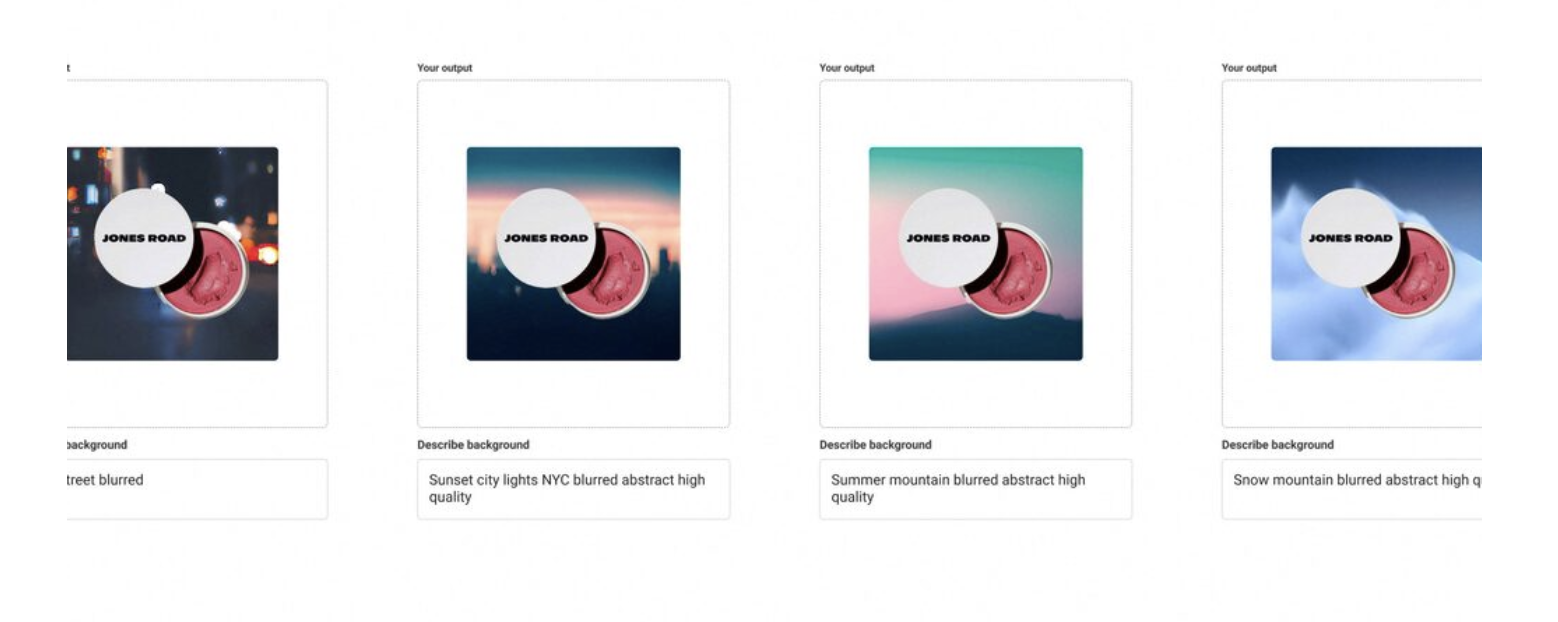
The platform powering these changes, Advantage+, is Meta's AI ad suite that has already quietly taken over a significant share of how ads are being run. Some agencies, including Hawke Media’ report that Advantage+ campaigns now account for 60 to 70% of their Meta spending. Meta’s fuller version, set to roll out by end of 2026, would allow advertisers to simply input a URL and a budget and let the AI handle everything: generating creatives, picking audiences, and optimizing placement across Facebook, Instagram, Messenger, and WhatsApp. When Zuckerberg announced this plan in June 2025, agency stocks dropped the same day. The market's read on who wins and who loses here was pretty clear.
Ask anyone working in paid Meta, or even social media for that matter — navigating Facebook's constant platform changes is increasingly difficult. Accounts and spend can look perfectly healthy when you sign off, and by the time you're back on, havoc has spread and the budget is blown.
Some of the biggest questions around this widespread launch of AI on Meta platforms and its attempt to dominate creative are: what happens when everything is on max and the system keeps building on itself? What happens to brand identity when the same AI is potentially pulling from competitor data to inform what performs?

Meta has historically changed its algorithm frequently, whether to appease political officials or turn up profits by introducing more ads. Who's to say it won't continue to tweak the platform so its AI-generated ads perform better, in the process killing independent creative entirely? And what happens when the model runs out of new data to train on? Sure, people might convert at first. But what about your brand three years from now, or five? Are brands really ready to cede control of their image to Meta?
There's also something to be said for what happens to data literacy as a skill when the platform does all the interpreting for you. Advertisers have always needed to be able to read beyond the numbers, to take actual insights and build future campaigns from them. When Meta's AI handles not just the execution but the analysis, that muscle atrophies. You're not learning your audience anymore, you're just accepting what the black box hands you.
For an entire industry, the numbers are already telling the story. Omnicom laid off more than 4,000 employees in December 2025. WPP, the world's largest advertising group, watched its stock fall 60% in 2025, with revenue dropping from roughly $18.5 billion to $17 billion and operating profit collapsing from around $1.6 billion to $500 million. The company is now targeting over $630 million in annual cost savings by 2028, and its CFO was fairly direct about where those savings would come from: people. An entire industry is being restructured in real time, and Meta is not a neutral party in that restructuring.
And for the average user? This likely means a feed increasingly enshittified by ads that don't feel human or visually interesting. Less of what you actually want to see, more generic copy, all of it built on employee labor, user engagement, and Meta's bottom line.

Some of this is already spilling into other platforms. Manus, an AI company Meta acquired last year, has been running what The Verge best described as get-rich-quick ads across TikTok, YouTube, and Instagram. The ads predominantly featured men in their late teens and early twenties on relatively new accounts, promising Manus's AI agent as an "easy side hustle" that "absolutely anybody can do," one that supposedly takes less than 10 minutes and can bring in a potential $5k a month.
Several posts featured a similar creative with tape covering the young creator's mouth, framed as a challenge to get paid without talking. Many of the posts have since been removed, but it highlights the ways Meta is quietly extending its reach into every ecosystem. What's perhaps most telling is that this isn't just an ad strategy anymore, it's a revenue model being sold to regular people, and specifically to young men. Hustle culture has spent the last decade building a pipeline of twenty-somethings primed to believe that passive income is one app away. Meta's ecosystem is now actively recruiting that exact demographic into its own monetization machine, promising a cut of the action in exchange for their time, their face, and their credibility.
But what else is there to do for Mark besides move fast and break things — whether those things be entire economic ecosystems, worker protections, political processes, or the basic trust of the people using his platforms. At the end of the day this is a company that has quietly positioned itself to own not just where you see ads, but who makes them, who they target, and what they say.
Like what I have to say? Support me and subscribe to my newsletter.