The world of influencer marketing has grown substantially in recent years. With a $33 billion valuation in 2025, up from under $10 billion in 2020, it is clear the industry is not just alive but accelerating. What is more compelling than the numbers, though, is what creators are doing with them. From Mr. Beast's somewhat edible candy empire to Alex Cooper's Unwell energy drinks, influencers are no longer just selling access to their audiences. They are building brands.
The latest to enter the arena are Alexis Androulakis and Dr. Christina Basias Androulakis, known online as the Lipstick Lesbians, with the launch of Leaked Labs. They join a long lineage of beauty influencers turned founders: Patrick Starrr, James Charles, Manny Gutierrez, Jaclyn Hill, and YouTube original Michelle Phan. Each arrived with a devoted audience. Each also comes with controversy. In that sense, the Lipstick Lesbians are right on schedule. What makes their particular controversy worth examining is everything underneath it.
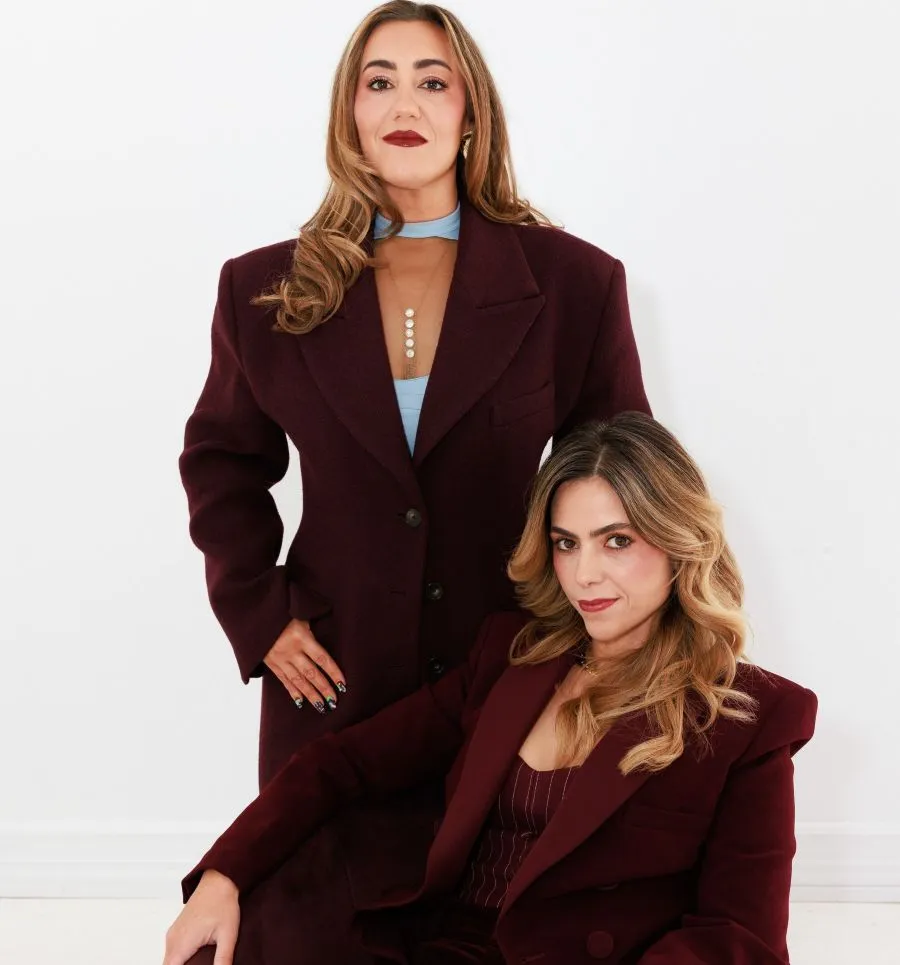
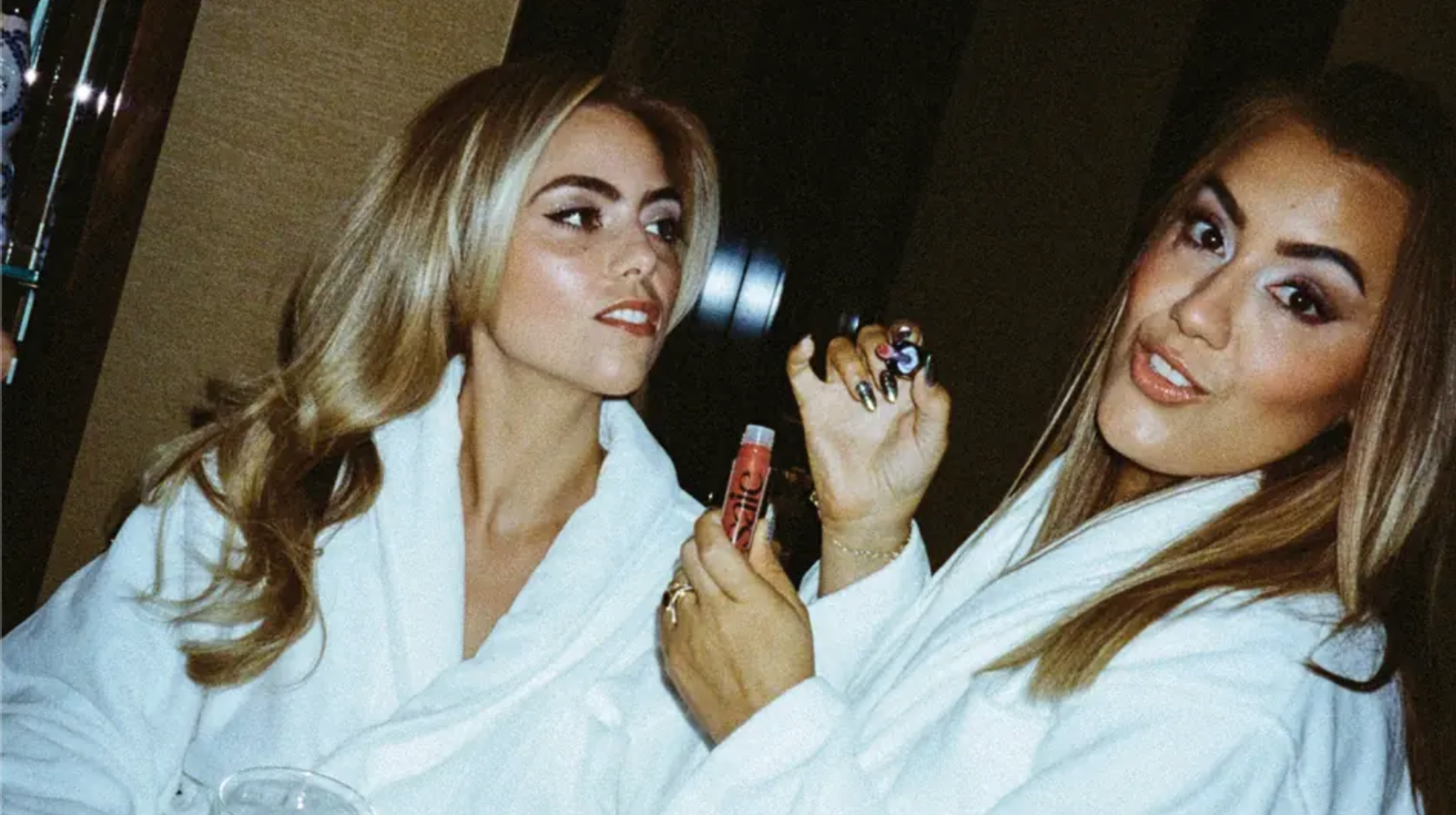
For those unfamiliar, Alexis Androulakis and Dr. Christina Basias Androulakis began posting to TikTok in November 2020. It wasn't until a December 2022 video of Alexis breaking down a Makeup By Mario bronzer palette that things really took off. What made it stick wasn't a haul or a glam tutorial. It was Alexis, a working beauty product developer, getting into the actual mechanics of how makeup is made, while Christina, her spouse, asked the questions a viewer at home would think to ask. It was specific, it was smart, and it was unlike anything else in the beauty space at the time.
Since then the duo has built a following of 1.2 million on TikTok and over 550,000 on Instagram, becoming known for their product insights, reviewing everything from eyeshadow palettes to blushes, and collaborating with brands like Pat McGrath and Rare Beauty. There has been a mix of organic and sponsored content throughout, which makes their move into founding their own brand a natural, if complicated, next step.

In early March, the Lipstick Lesbians launched Leaked Labs with their debut product, Leak 001: Amplify Flexi Powder. It sold out immediately. The product featured four pigmented, flexible discs housed together in a single shared tin, designed to be used wet or dry for anything from highlighter to eyeshadow. The sellout was exciting. What came after was not.
The brand's premise is this: Leaked Labs launches beauty testers rather than fully finished products. The idea is that the brand "leaks" limited quantities of prototypes from manufacturers, products that for whatever reason never got picked up by another brand, and sells them directly to consumers. You are not buying a finished product. You are buying into the process, the experience.
I understand what they were going for. Alexis has spent years in product development and has talked openly about innovations that never made it to market. The concept of pulling back the curtain on that process is genuinely interesting, and there is something almost romantic about the idea of getting access to what the industry leaves behind. But the communication gap between that vision and what consumers actually received was real. These were almost finished products, not early stage prototypes, and the "lab" framing created expectations the product could not meet. Calling it user testing created its own problem, because traditional user testing compensates participants. Paying $34 to test someone else's product is not user testing. It is just shopping, with extra steps.
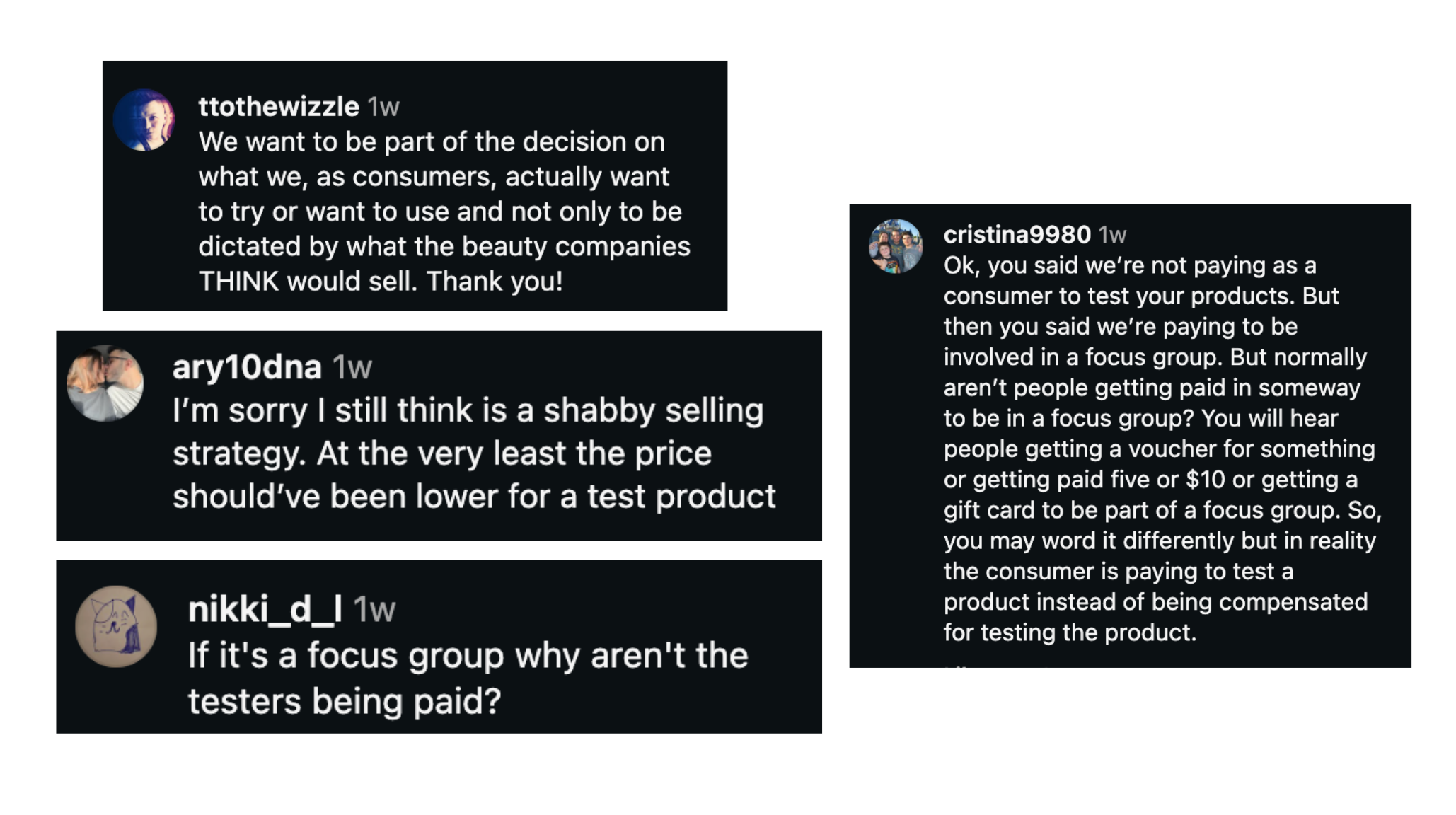
The packaging made it worse. Four pigmented discs sharing one tin means that with any moisture, the colors will eventually bleed into each other. The sanitation concerns that followed were not unreasonable. And in an economic moment where people are genuinely strapped, $34 for something positioned as unfinished landed harder than it might have a few years ago. The price point is not outrageous for cosmetics. But it is a lot to pay for something that is not done yet.
It is also worth contextualizing the moment this launch happened in. Influencer distrust has been growing for years, fed by a decade of overconsumption culture that has left a lot of people feeling like they have been sold things they did not need by people who do not live anything close to their reality. Women influencers in particular have borne the brunt of this sentiment, and Jaclyn Hill has become something of a recurring symbol of it, a name that gets invoked whenever the gap between influencer credibility and consumer trust comes up. Layer onto that the very real economic pressures most people are navigating right now, rising costs, stagnant wages, tariffs hitting everyday goods, inflation that has not fully loosened its grip, and the idea of frivolous spending has become genuinely inaccessible for a lot of people.
The Lipstick Lesbians responded with product demos, videos with chemists addressing hygiene concerns, and what they called a "state of the union." If I had to speculate, that video was prefilmed alongside other content given their outfits, which raises its own questions about how prepared the response actually was versus how prepared it appeared. Whether they had external crisis communications support is unclear, but the overall response felt reactive rather than ready. Which, given the nature of the launch, was perhaps inevitable.
Here is where I want to be careful, because there is a difference between what was fair and what followed.
The product critique was fair. The sanitation concerns were fair. The frustration around price point was fair. Even the feeling of being gimmicked is understandable, because the communication around what Leaked Labs actually was left too much room for disappointment. I get it.
Here is where I want to be careful, because there is a difference between what was fair and what followed.
The product critique was fair. The sanitation concerns were fair. The frustration around price point was fair. Even the feeling of being gimmicked is understandable, because the communication around what Leaked Labs actually was left too much room for disappointment. I get it.
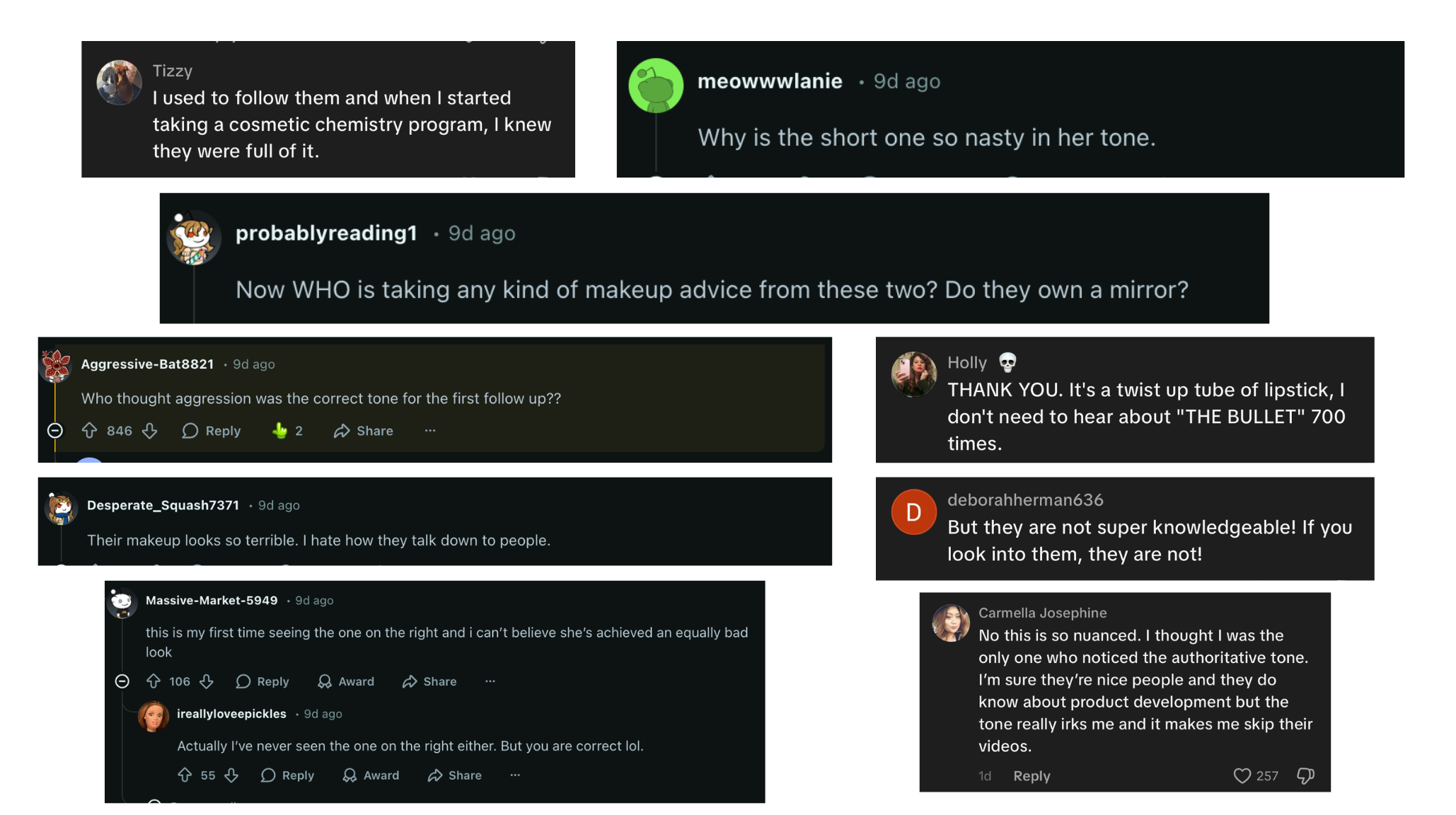
What is harder to defend is how quickly the criticism expanded beyond the product and into the women behind it. Comments questioning their makeup application, their appearance, their credentials, their tone. One person called them garish. Others described Alexis's communication style as aggressive, authoritative, pompous. Her industry language, the specific vocabulary of someone who has actually worked in product development, was framed as pretension rather than expertise.
And then there were the comments about Christina specifically. Several took aim at her appearance in ways that went beyond criticism and into something more revealing, comments that masculinized her, that reduced her to a caricature. The impulse to masculinize lesbian women, to strip them of their femininity as a form of dismissal or ridicule, is one of the oldest tricks in the book. It tells you less about Christina and more about the discomfort some people have with women who exist outside of a male gaze entirely.
It is worth pausing on credentials too. Alexis holds a BA from the Fashion Institute of Technology in cosmetics and fragrance marketing and has worked in product development with brands including Shiseido. Her background is not a rumor. It is on her LinkedIn. And yet her knowledge was treated as suspect in a way that is worth comparing to another beauty founder controversy most people will remember.
When Jaclyn Hill's 2019 lipstick launch produced products with visible quality issues, the criticism was swift and brutal. Her business ethics were questioned. Her ability to run a company was questioned. But her makeup skills were not questioned. Her appearance was not questioned. Her tone was not described as aggressive. The criticism stayed, more or less, on the business.
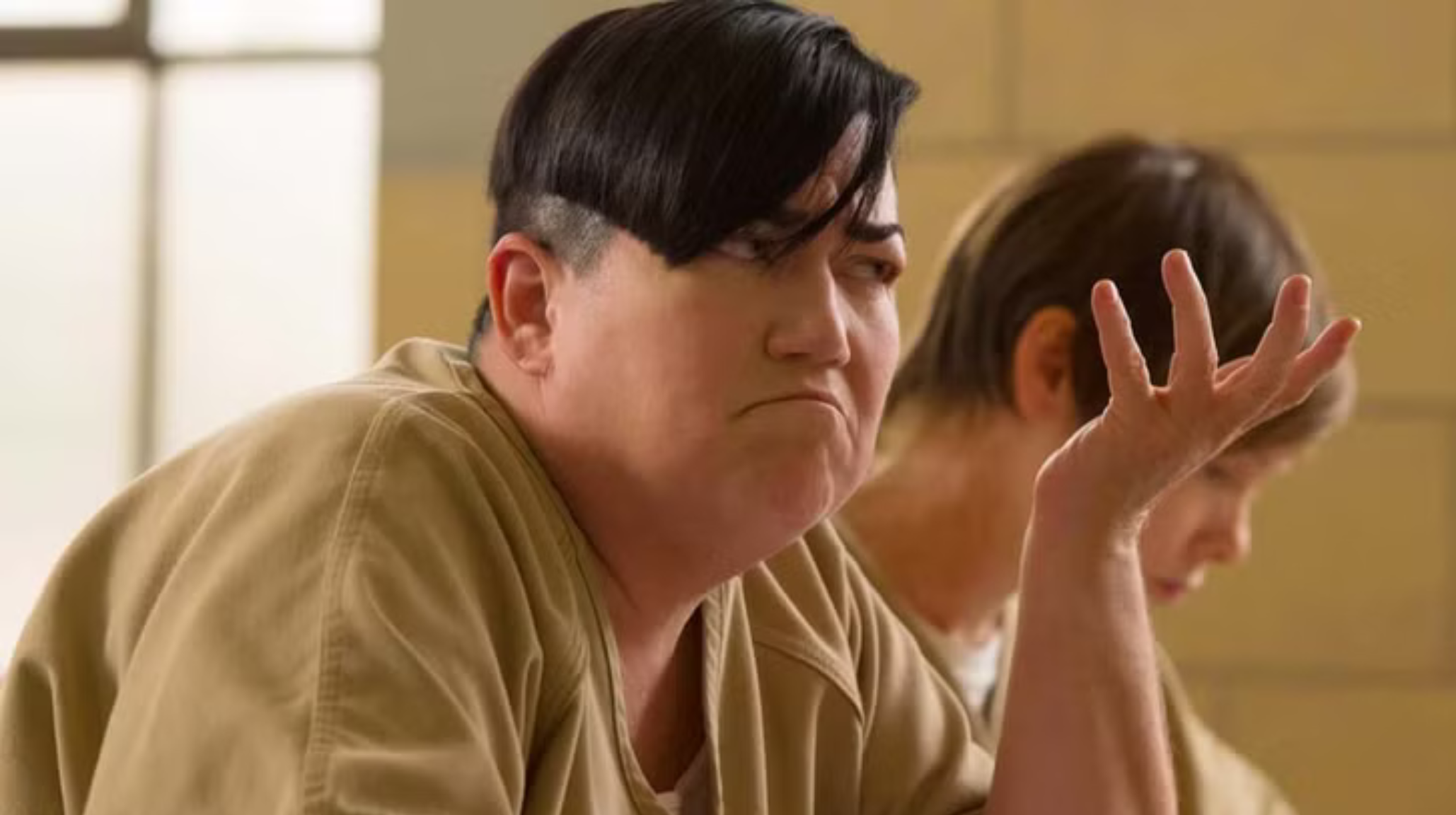
There is a cultural script for how lesbians, and dykes in particular, are supposed to be received. It has been written and rewritten across decades of media representation. The angry lesbian. The aggressive lesbian. The man-hating lesbian. The psycho dyke trope is so prevalent it has long become a wry in-joke among queer women themselves. From Mrs. Danvers in Rebecca to Santana Lopez in Glee to Big Boo in Orange Is the New Black, the template is consistent: the lesbian who is too much, too loud, too threatening, too unwilling to make herself palatable.
The Mean Lesbian trope reflects real life outside of media too. It stems from the perception that the sexuality itself is about hating men, that a woman who does not center men in her life must therefore be against them. The reality is far less dramatic. Not centering men is not the same as hating them. But that distinction has never been particularly convenient for the people invested in the stereotype.
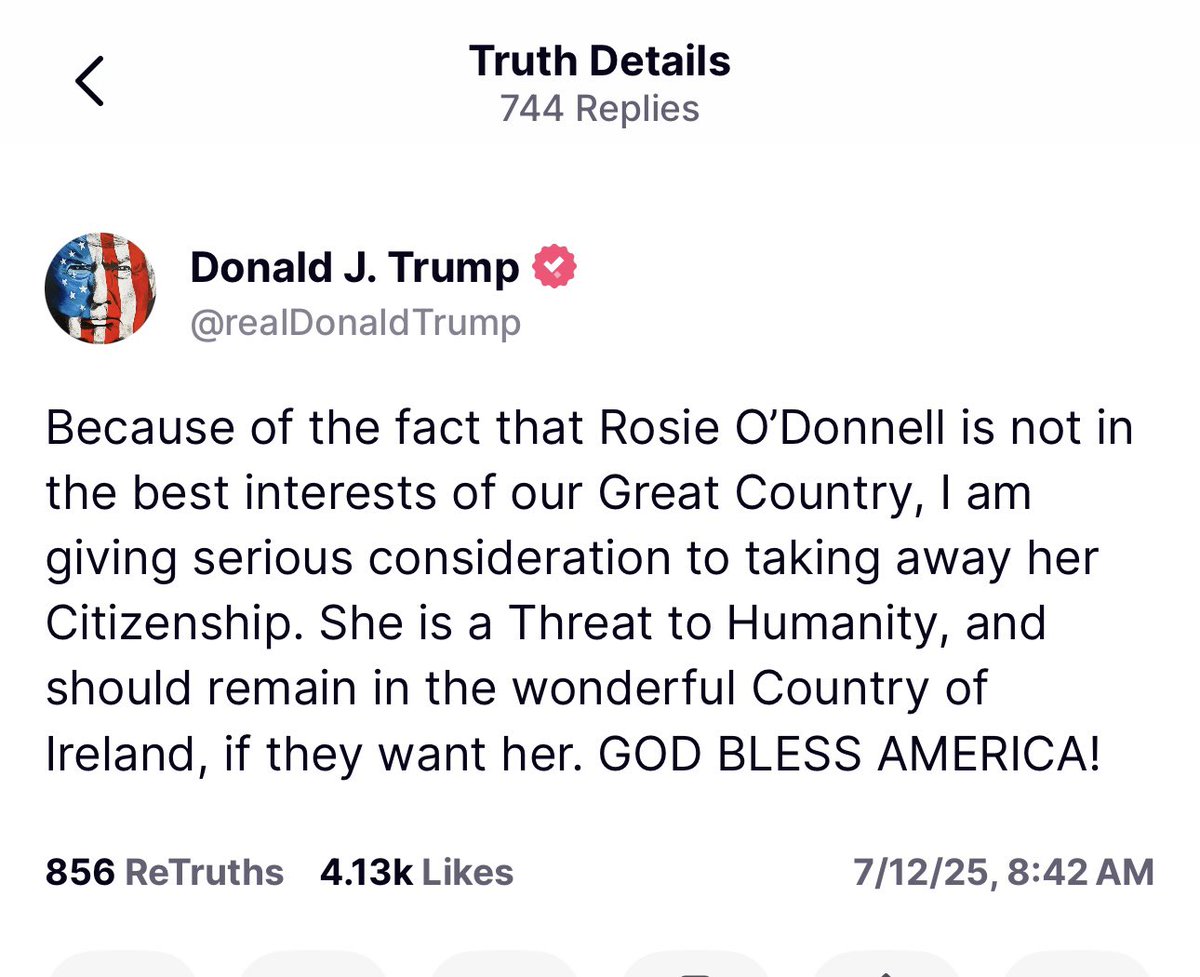
What makes the Lipstick Lesbians case interesting is that they are femme. They are not butch, they are not androgynous, they are not legible as queer by the most reductive visual shorthand. And yet the script still got applied. The comments calling Alexis aggressive, calling their tone authoritative and pompous, and the comments masculinizing Christina's appearance, those are not random. Lesbian women have been ostracized by straight and even liberal feminist spaces, described as scary man-hating ogres, a stereotype that has nothing to do with the actual women and everything to do with the discomfort their existence produces.
The industry language that made the Lipstick Lesbians compelling, that made them different, that built their entire following, suddenly became evidence of arrogance the moment the product disappointed. That is a very convenient reframe. And it is one that lands differently when the women in question are queer.
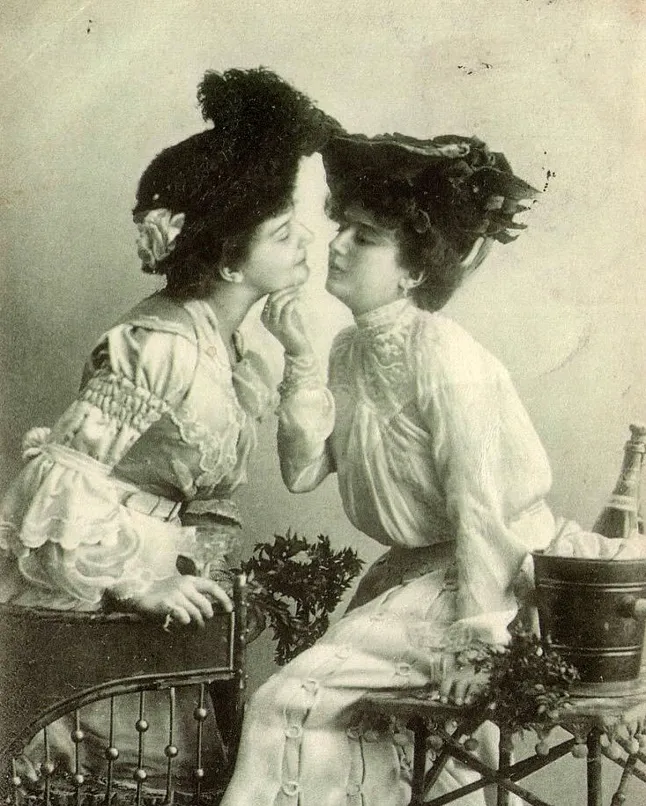
To be a femme lesbian is to exist on the outside of multiple worlds simultaneously. Too feminine for some queer spaces. Too Queer for straight ones. Femmes have long been subject to a double dismissal: not appearing culturally different enough from heterosexual women to be seen as breaking gender taboos, and not appearing feminist enough to merit attention or respect from some members of the Queer community. The Lipstick Lesbians occupy exactly that space. Their femininity makes them invisible as queer to people who rely on visual shorthand. Their queerness makes their femininity suspect to people who think lesbian identity should look a certain way.
Individuals who identify as femme report experiencing invisibility within both LGBTQIA+ and broader communities. Their expressions of femininity are often overlooked, invalidated, or dismissed, resulting in feelings of isolation and a lack of representation. That invisibility is not passive. It has consequences. And it shows up in comment sections just as readily as it shows up anywhere else.
.png)
I say all of this because I have empathy for when criticism, warranted or not, comes through. Because I have been through it.
I am a femme dyke/ Queer woman. I am very comfortable in my womanhood, and I have never needed anyone to validate that for me. But comfort in yourself does not protect you from how other people receive you, and I have spent a significant part of my professional life feeling misunderstood, isolated, and judged in spaces that were supposed to include me.
The hardest moments have not always come from where you might expect. In corporate settings in particular, some of the harshest criticism I have faced has come from straight white women. There is this idea of the girl's girl, this promise of solidarity, and then the reality of it does not always match. I have been in rooms where someone loudly declared themselves a girl's girl and then, when it came time to actually show up, did not. I have had positive reviews withheld. I have been misread and mischaracterized in ways that followed me.
.png)
I have both the most and the least in common with straight women. I experience unwanted sexual attention. I experience harsh criticism of my appearance. I experience the questioning of my skill and my capability. I experience the internal insecurity, the issues around access, all of the hallmarks of womanhood. And sometimes you just want to be able to commiserate with someone about it. When that is met with rejection, when the solidarity is conditional, it stings in a way that is difficult to articulate. Fret not for me, I experience the triumphs of womanhood too, and I couldn’t enjoy it more.
Seeing the Lipstick Lesbians, two femme women excelling in a space I love, has meant something to me. Not because I agree with every decision they make. I do not. But because their version of femininity, one tied to their queerness and not to anyone else's approval, is one I recognize. To watch that get ridiculed, to watch their appearance get picked apart and their tone get pathologized, and to see people not recognize what is underneath it, that is the part that stings.
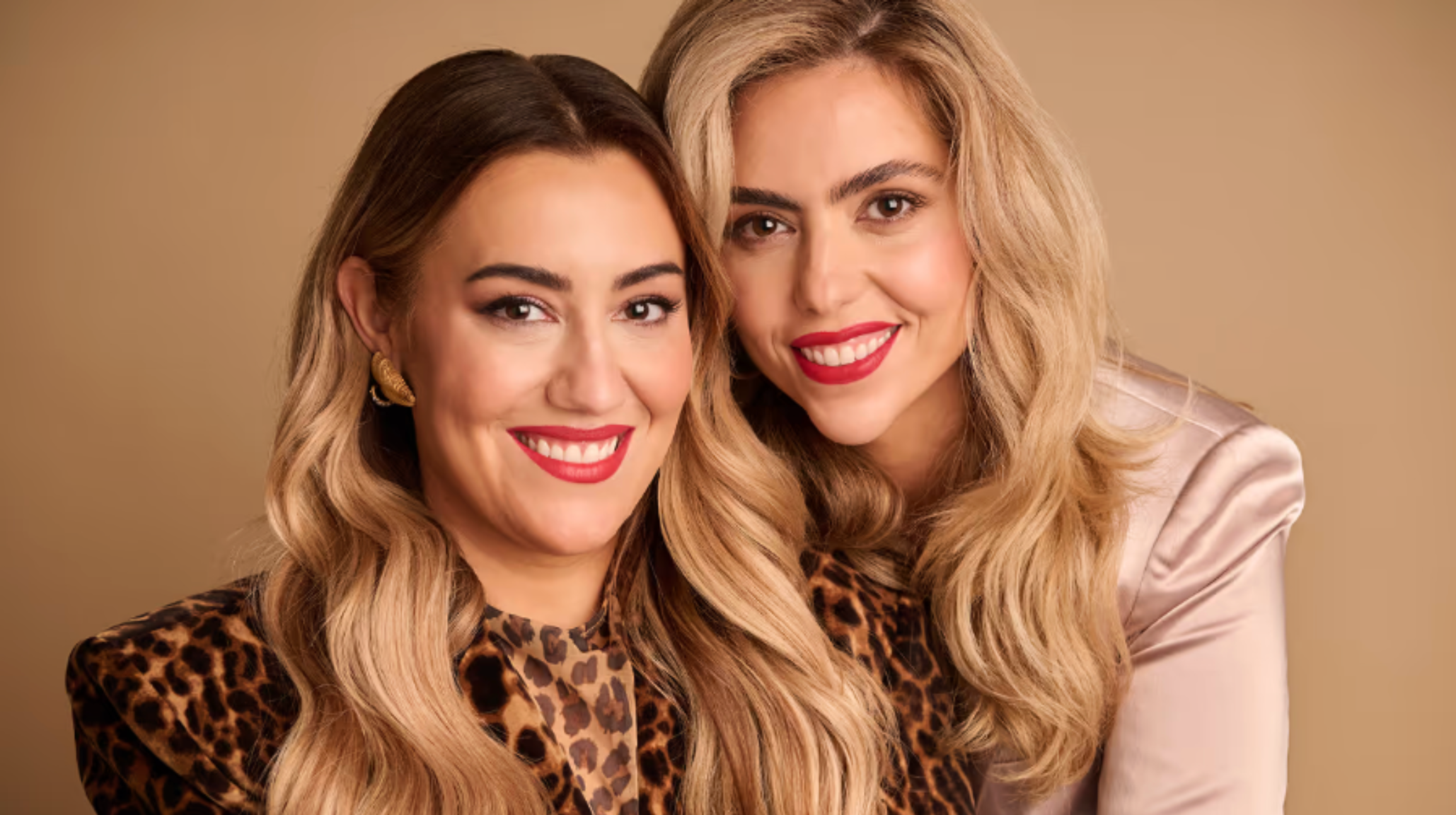
The Lipstick Lesbians made mistakes with this launch, and I think it is worth saying that plainly one more time before we close. The concept was interesting but undercommunicated, the packaging created real functional problems that were not incidental but central to the product experience, and the user testing framing set expectations that the product, almost finished as it may have been, could not honestly meet. Those criticisms are fair, they were always fair, and nothing I have said here is meant to wave them away.
But at some point the conversation stopped being about the product and became about something else entirely. It became about their appearance, their tone, their credentials, their femininity, and whether these two women were simply too much. Too aggressive, too authoritative, too unwilling to make themselves easier to digest. That is a different conversation with a much longer history than a product launch.
The beauty community has always had a complicated relationship with the women it builds up, and controversy is practically a rite of passage for anyone who tries to create something in this space. But not every controversy is the same, and not every pile-on carries equal weight. When the criticism of two femme lesbian women starts to sound less like consumer feedback and more like a cultural script, it is worth slowing down and asking who wrote that script and who it has always been written for.
Like what I have to say? Support me and subscribe to my newsletter.