*This is a condensed version, if you are looking for a larger fleshed out version with more specifics, please read here.
With The Social Reckoning set to hit theaters on October 9, 2026, we’re returning to Facebook. Only this time, we’re dealing with a very different Facebook than the one we left behind in The Social Network. The original film took us through Facebook’s earliest years, from its creation at Harvard in 2004 through the lawsuits and betrayals that accompanied its meteoric rise. But much has changed in the years since.
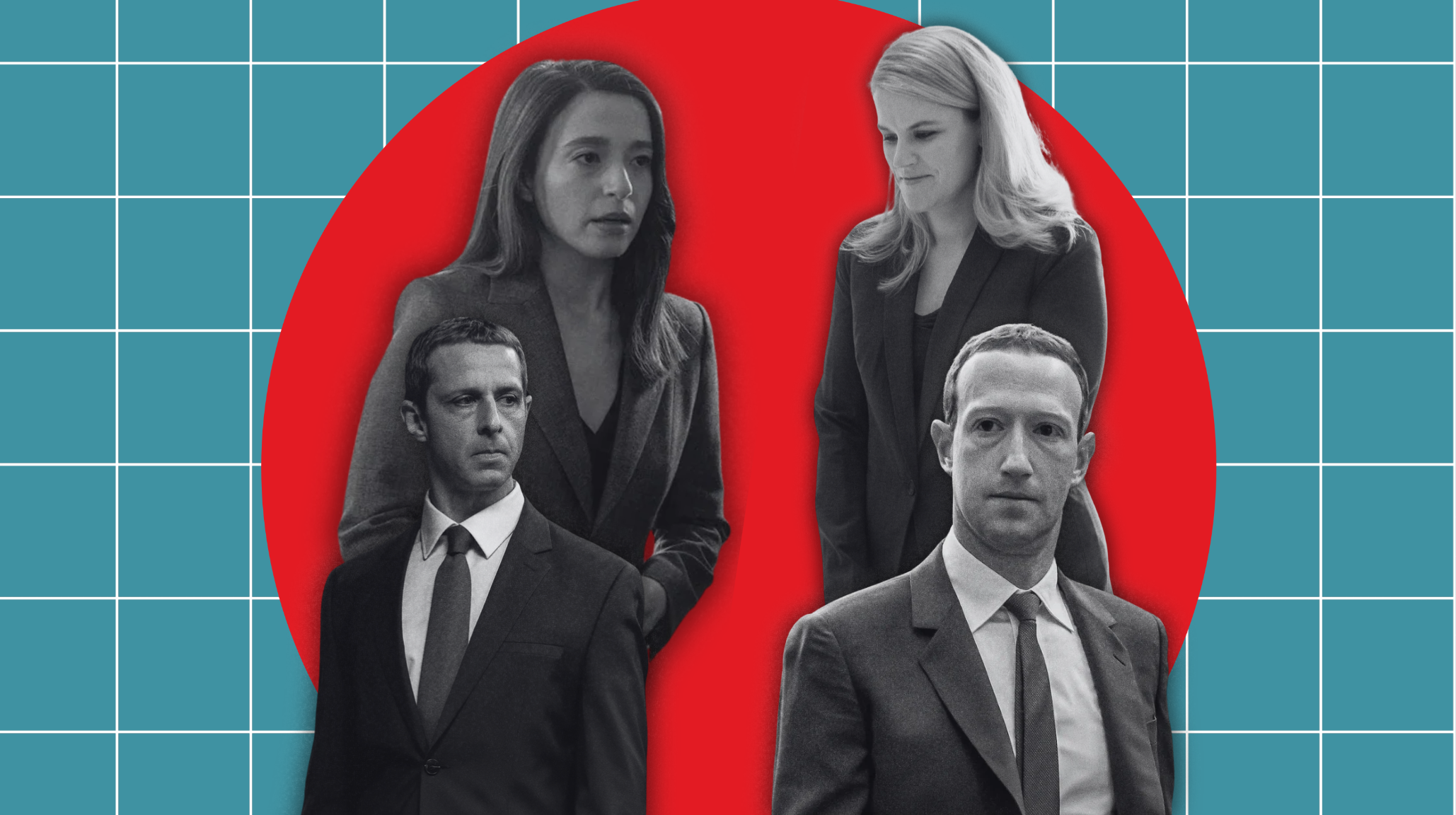
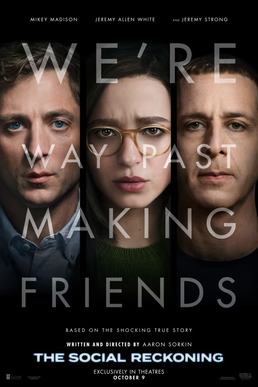
Written and directed by Aaron Sorkin, The Social Reckoning is being described as a companion piece to The Social Network. Mikey Madison stars as former Facebook employee and whistleblower Frances Haugen, Jeremy Allen White plays Wall Street Journal reporter Jeff Horwitz, and Jeremy Strong takes over the role of Mark Zuckerberg. A real doozy of Jeremys.
Unlike The Social Network, this story takes place after Facebook had already become one of the most powerful companies on the planet. The film is based on the events that led to The Wall Street Journal’s 2021 investigation The Facebook Files, when thousands of pages of internal Facebook documents provided by former Facebook data scientist Frances Haugen offered an extraordinary look at what was happening behind the scenes at the company.
So, ahead of The Social Reckoning, I thought it would be useful to revisit some of Facebook’s biggest scandals from this period and, more importantly, contextualize how we got here and the history behind the film. This isn’t intended to document every Facebook controversy to ever grace the internet. We would be here all day. Instead, consider this your pre-movie refresher on the Facebook scandals, controversies and internal decisions that provide context for The Social Reckoning. I’ve worked in social media for more than a decade and, for better or worse, have become far too acquainted with Meta’s suite of products along the way.

The Facebook Files and What Facebook Knew
Facebook knew a lot. Like, a lot. Internal documents showed the company was aware of problems across its platforms involving misinformation, political polarization, violent content, human trafficking, calls for violence against specific ethnic groups, teen mental health, and more. It also had tools capable of addressing at least some of these problems and, according to whistleblower Frances Haugen, repeatedly failed to adequately use them when doing so conflicted with growth and engagement.
Among the revelations that received the most attention, Facebook’s own research found Instagram could make body-image issues worse for some teenage girls. The documents also revealed XCheck, an internal system that allowed millions of celebrities, politicians, journalists, and other high-profile users to go through a different moderation process than the average Facebook user.
Cambridge Analytica and the 2016 Data Privacy Scandal
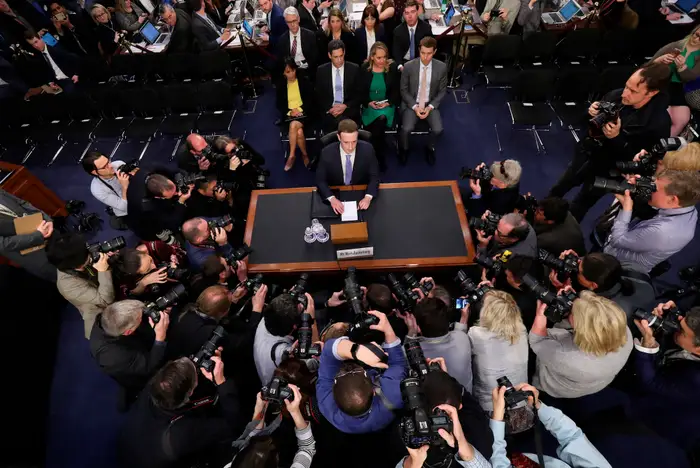
In 2018, Facebook became engulfed in a massive privacy scandal after it was revealed that data connected to as many as 87 million Facebook users, most of them in the United States, may have been improperly shared with Cambridge Analytica, a political consulting and data analytics firm that worked for Donald Trump’s 2016 presidential campaign. The data originated with a Facebook personality quiz called “thisisyourdigitallife,” created by Cambridge University researcher Aleksandr Kogan. Only around 270,000 people actually downloaded the app, but Facebook’s policies at the time allowed developers to collect certain information about those users’ Facebook friends as well, dramatically expanding the amount of data Kogan was able to collect.
Cambridge Analytica used Facebook data as part of its efforts to build psychographic voter profiles and offer political microtargeting services. The company also had a notable connection to Trump campaign chief executive Steve Bannon, who had previously served as a vice president and board member of Cambridge Analytica. The scandal raised a much larger question that would follow Facebook for years: how much control did users actually have over their data once they handed it to Facebook?

Russian Interference in the 2016 U.S. Election
While Cambridge Analytica was harvesting and using Facebook data for political targeting, a separate operation was unfolding on the platform. Beginning years before the 2016 election, the Internet Research Agency (IRA), a Russian organization based in St. Petersburg, created fake American personas, Facebook pages and Instagram accounts designed to look like they were being run by actual people and grassroots political organizations in the United States.
Facebook eventually told Congress that approximately 80,000 posts from 120 Russian-backed Facebook pages reached an estimated 126 million people, while IRA-linked Instagram content reached millions more. The operation touched issues across the political spectrum, including race, immigration, religion, gun rights and LGBTQ+ issues, often using existing divisions in American society as material for its content. U.S. intelligence agencies concluded that Russia carried out a broader influence campaign targeting the 2016 election, while later investigations documented the IRA’s extensive use of American social media platforms.

Facebook, Myanmar, and the Rohingya Genocide
In 2017, Myanmar's military launched a campaign of violence against the Rohingya, a predominantly Muslim ethnic minority living primarily in the country's Rakhine State. The military's operations involved mass killings, sexual violence and the destruction of villages, forcing more than 700,000 Rohingya to flee to neighboring Bangladesh. United Nations investigators subsequently found evidence of genocidal intent and called for senior Myanmar military officials to be investigated and prosecuted for genocide, crimes against humanity and war crimes.
Facebook became a central part of the controversy because of its role in spreading anti-Rohingya hate speech, misinformation and military propaganda. In a country where Facebook had become a primary source of news and information, Myanmar's military and other actors used the platform to circulate dehumanizing content and inflame ethnic and religious tensions. A 2018 United Nations fact-finding mission identified Facebook as a significant vehicle for spreading hatred, while an independent human rights assessment commissioned by Facebook concluded that the company had not done enough to prevent its platform from being used to incite violence.
Facebook's Attempted Expansion into China and Censorship
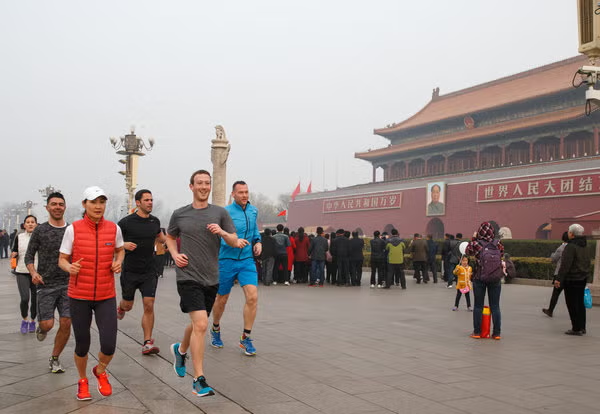
Facebook had been blocked in mainland China since 2009, but that didn't stop Mark Zuckerberg and the company from pursuing access to one of the world's largest internet markets. Throughout the 2010s, Zuckerberg made visits to China, cultivated relationships with Chinese officials and even learned Mandarin as Facebook explored ways to operate within the country's strict internet regulations. In 2016, reporting revealed that Facebook had developed software that could suppress certain posts from appearing in users' News Feeds in specific geographic areas, potentially allowing a Chinese partner to censor content. Facebook never launched its main social network in mainland China.
Facebook's Fight for Attention: Video, Algorithms, and Engagement
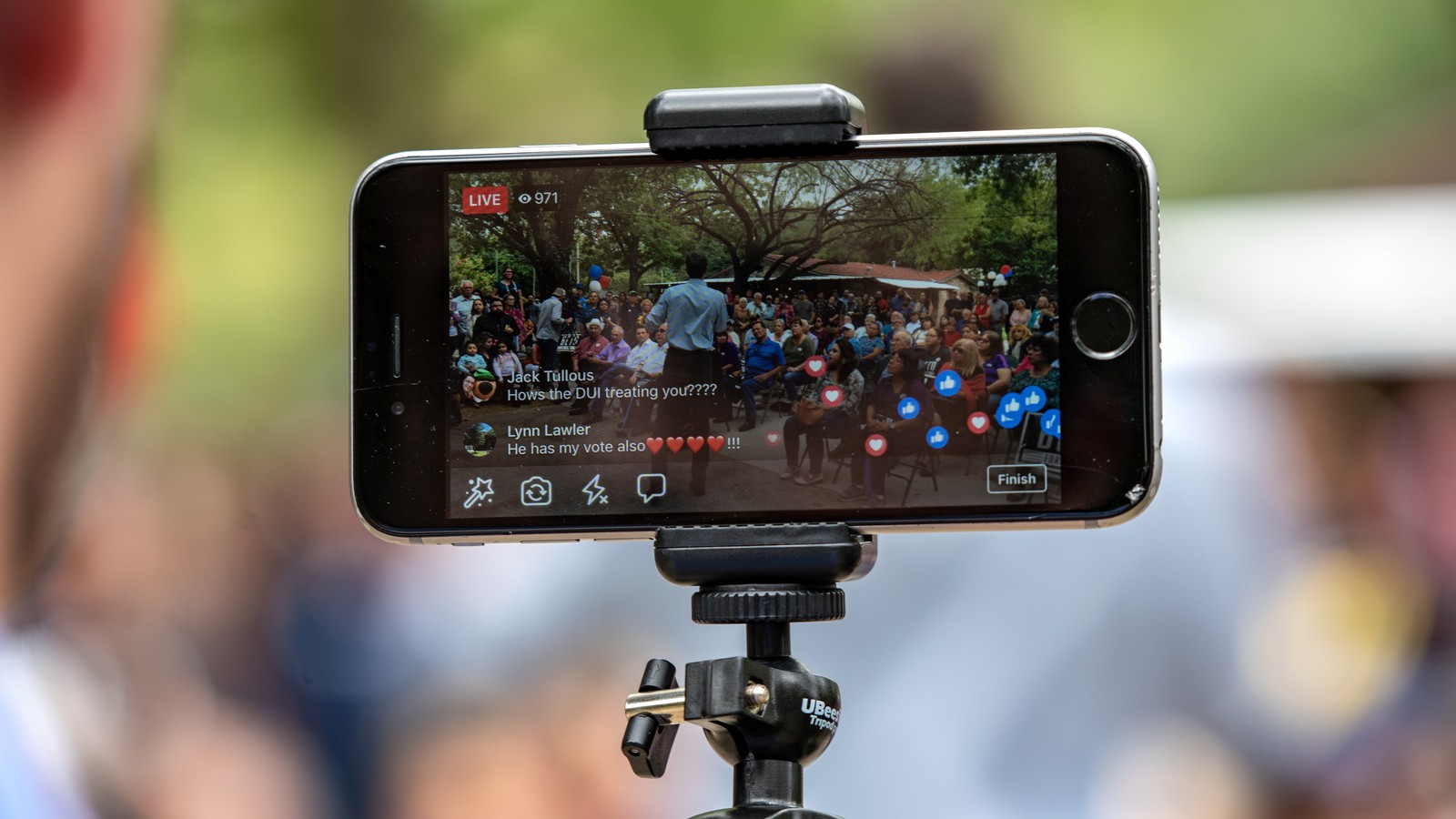
By the mid-2010s, Facebook was competing with platforms like YouTube and Snapchat for users' attention, and video was becoming an increasingly important part of that competition. Facebook soon began prioritizing video across its platform, encouraging publishers, brands and creators to invest heavily in video production. This quickly became known as the pivot to video, some of that coming from marketing buzzwords, some from actual reality I’d argue. Many publishers and brands, including news organizations restructured their content strategies, invested in video teams and, in some cases, reduced their emphasis on written reporting. Then, in 2016, Facebook admitted (to an ad agency no less) that it had inflated a key video-viewing metric by an estimated 60% to 80%, raising questions about the reliability of the data publishers and advertisers had been using to make business decisions.
In 2018, Facebook made another major change to its News Feed algorithm, prioritizing what it called meaningful social interactions, including posts that generated comments, conversations and shares. While Facebook framed the change as an effort to encourage more personal connections, it also raised questions about whether engagement-based ranking could reward sensationalized, divisive or inflammatory content. These decisions would become particularly relevant in the 2021 Facebook Files, which revealed internal concerns about how the company's algorithms influenced what people saw and how they interacted online.

Facebook's FTC Fine and Antitrust Battles
In July 2019, Facebook agreed to pay a record-breaking $5 billion penalty to settle Federal Trade Commission (FTC) charges that it had violated a 2012 privacy agreement. The investigation came in the aftermath of the Cambridge Analytica scandal but extended to broader allegations that Facebook misled users about how their personal information was shared. The settlement also imposed new privacy oversight requirements.
In December 2020, the FTC filed a separate antitrust lawsuit alleging that Facebook had illegally maintained its dominance in personal social networking, particularly through its acquisitions of Instagram in 2012 and WhatsApp in 2014. Regulators argued that Facebook had acquired potential competitors to protect its market position, while Facebook disputed the allegations and maintained that it faced substantial competition.
Facebook, the 2020 Election, and the January 6 Capitol Attack
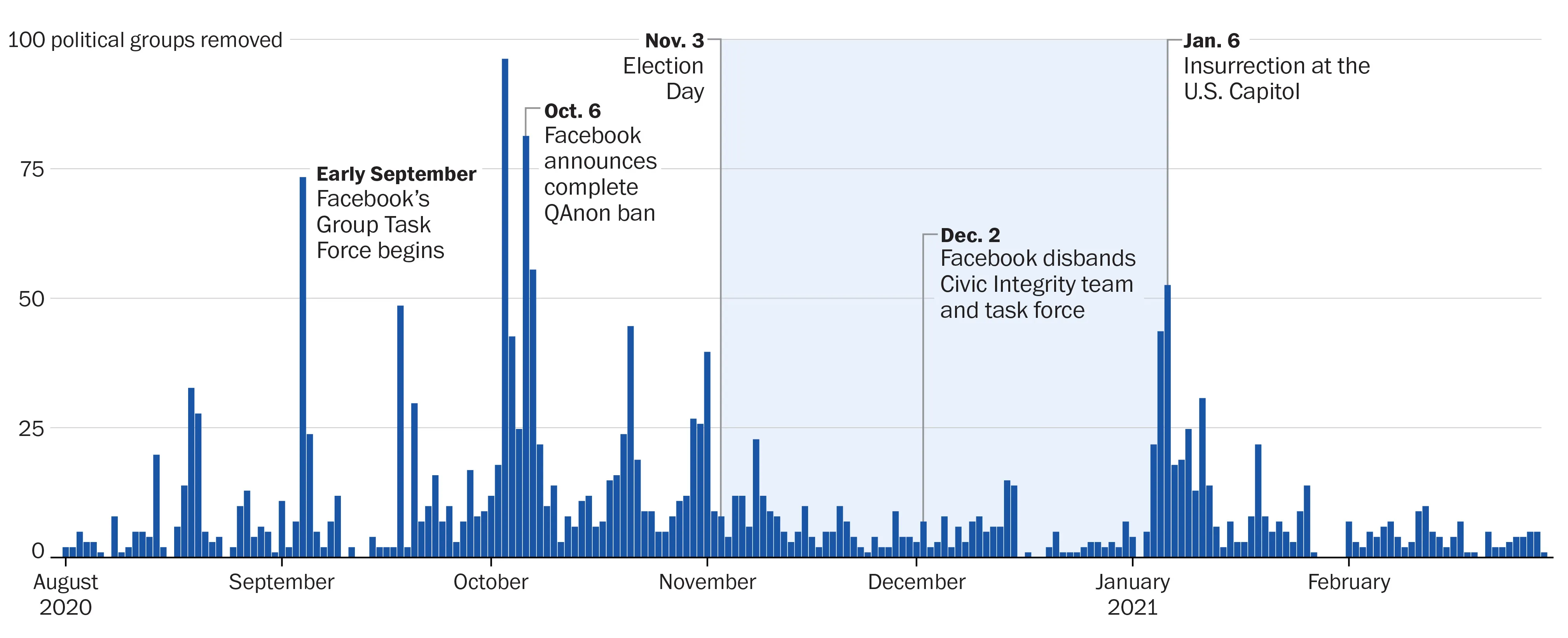
Following the controversies surrounding the 2016 presidential election, Facebook introduced additional safeguards ahead of the 2020 U.S. election, including restrictions on political advertising, labels on disputed election claims, measures against voter suppression and a dedicated Civic Integrity team focused on risks to elections and public discourse.
But the controversy didn't end when the votes were counted. As false claims that the election had been stolen spread online, Facebook began rolling back some temporary election-related protections. On December 2, 2020, the company dissolved its standalone Civic Integrity team and redistributed its responsibilities across other departments. In the weeks leading up to the January 6, 2021 attack on the U.S. Capitol, election misinformation, extremist rhetoric and calls for violence continued circulating on Facebook. Former employees and whistleblower Frances Haugen later questioned whether the company had weakened its safeguards too soon, while Facebook maintained that many protections remained active through the presidential inauguration.
The Facebook Files, Meta's Rebrand, and What Comes Next
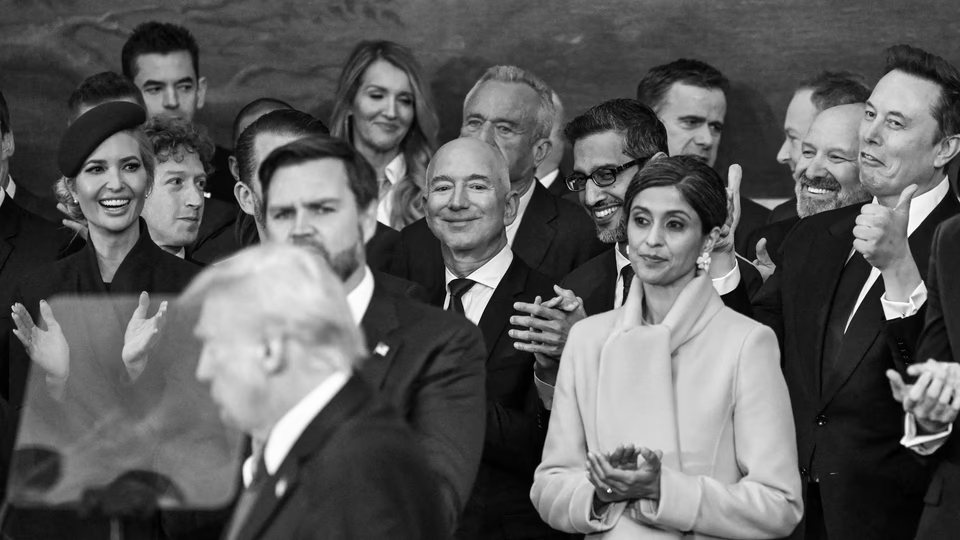
In October 2021, former Facebook employee Frances Haugen testified before Congress after providing thousands of internal company documents that became known as the Facebook Files. The documents offered a look into Facebook's internal research and discussions surrounding misinformation, political polarization, user safety and Instagram's impact on young people. Haugen argued that the company repeatedly prioritized growth and engagement over safety, while Facebook disputed her characterization of its research and decisions.
That same month, Facebook announced it was rebranding its parent company as Meta, reflecting Mark Zuckerberg's ambitions to build the metaverse, a future of interconnected virtual spaces powered by augmented and virtual reality. While the company maintained that the rebrand reflected a long-term vision rather than an attempt to distance itself from controversy, the timing was certainly interesting. After years of scrutiny surrounding its existing platforms, Facebook was looking toward building the next generation of the internet.
At the time of writing this, October 15, 2026, I have not yet seen The Social Reckoning, so I can't speak to its accuracy or how faithfully it portrays these events. But my hope is that the film gives us an opportunity to revisit this period of Meta's history and think critically about the impact social media has had on nearly every part of our lives. From politics and how we communicate with friends to how we see ourselves, these platforms have fundamentally changed how we experience the world.
I also hope it encourages people to think more critically about the information they encounter online. We've seen documented examples of foreign political interference, coordinated disinformation campaigns and attempts to manufacture outrage through social media. Russian interference surrounding the 2016 election is perhaps one of the clearest examples, and it's worth remembering that these tactics were not hypothetical. They happened.
More recently, in October 2026, reports of Ukrainian strikes on Russian data centers prompted renewed conversations about Russian bot farms and whether the attacks had disrupted coordinated online activity. Ukrainian President Volodymyr Zelenskyy suggested that the strikes had reduced bot activity, although subsequent reporting from BBC Verify and Deutsche Welle found insufficient evidence to support claims of a significant reduction.
Throughout the last few years, I've wondered, if we've documented these tactics being used before, who's to say they aren't still being used? That doesn't mean every inflammatory post is the work of a foreign government, but I think we should be asking more questions about where information originates, how it spreads and who benefits from it.
And while I certainly don't agree with much of the extremist rhetoric coming from the political right, I'd also argue that parts of the left are contending with their own issues surrounding purity politics and misinformation. But how much of the division we see online is rooted in genuine ideological differences, and how much is being intensified by misinformation? Whether that information comes from foreign political actors, domestic agitators or people unknowingly spreading false claims, the consequences can extend well beyond our screens.
Deliberately misleading people and encouraging division can have serious consequences for society. And perhaps that's what I hope people take away from The Social Reckoning. Not simply an understanding of what Facebook did, but a greater willingness to question the information we consume, the platforms distributing it and the people who stand to benefit from keeping us divided.
As always, please do your own research and take what resonates and leave what doesn't.
Like what I have to say? Support me and subscribe to my newsletter.