.png)
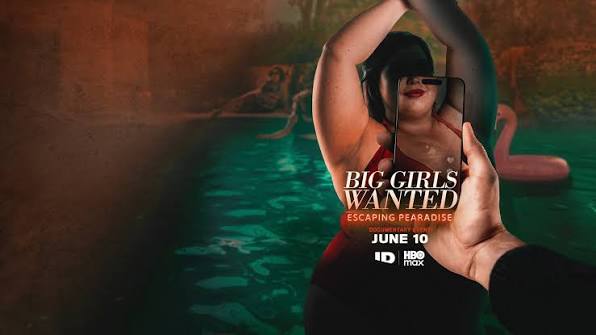
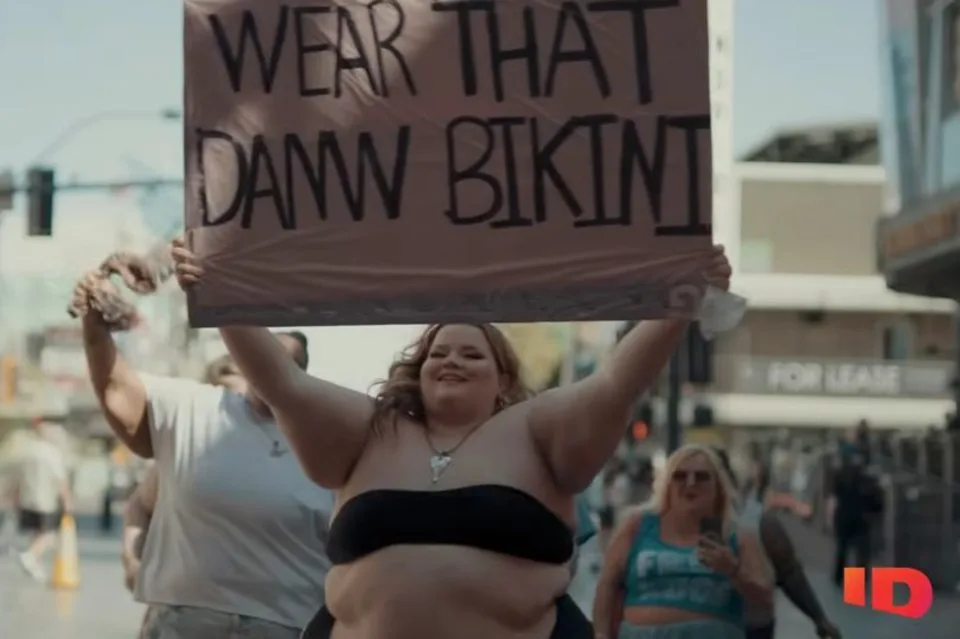
I'm a fat woman and creature of the internet, so naturally at some point the TikTok account Pearadise came across my feed. At its peak the account had over 250k followers and pulled in hundreds of thousands more viewers. Now it's true crime history, the subject of the ID channel's new documentary, Big Girls Wanted: Escaping Pearadise.
I'll be honest, I don't fully know how to talk about this objectively. I work in social media, so I understand exactly how these platforms shape discourse. I also made fat fetish and feederism content myself, back when I was doing sex work, and my experience wass less than positive. And I've spent my whole life as a fat person who's been largely considered undesirable. All of that means I'm not coming to this cold, and I don't want to be reduced to any one part of it. I don't want to be known as the feederism woman, to have my life tied to a fetish.
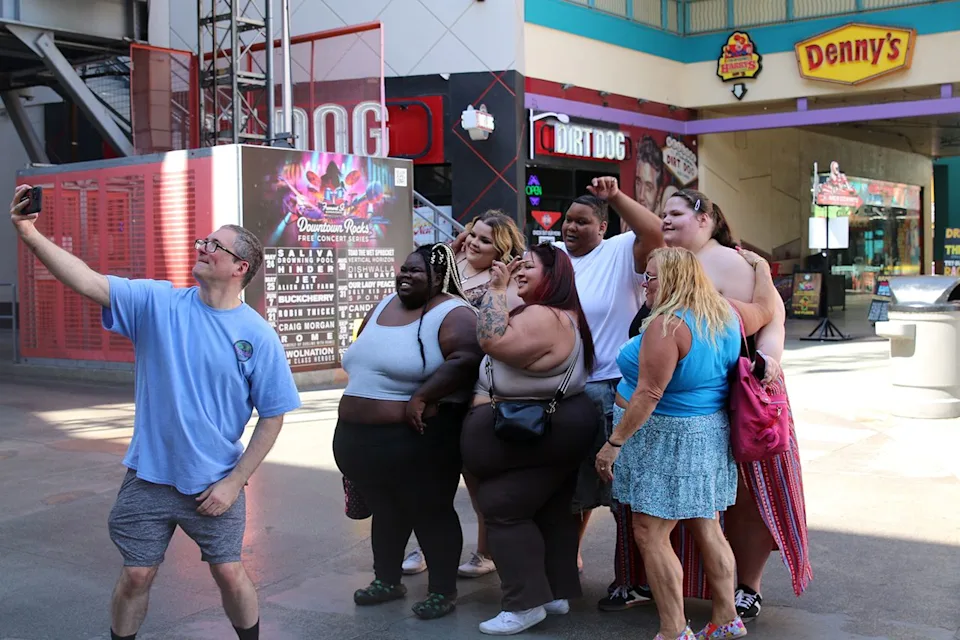
Pearadise describes itself as "a community, a location and a vibe," based in Las Vegas. It was founded by Stefan Wilhelmy, whose social handle is ssbbwfan73 (subtle). The community gained its following on TikTok during COVID lockdowns, and has since spread into Discord and other livestreaming platforms.
The documentary introduces us to Stefan, his current girlfriend (twenty years younger than him, though he won't call her his girlfriend, and who gives him money from her own clip work), several current and former residents of Pearadise, including photojournalist Emily Kask, and a number of other women, referred to for legal reasons as alleged victims. Several accounts of sexual assault are laid out.
It's worth noting upfront that despite Pearadise's self-description as a place for all bodies, the house is overwhelmingly fat women. Very few of the social media videos coming out of the house feature men other than Stefan.
Much of the documentary centers on one specific fetish, feederism, and I think it's worth actually pulling apart what that word means, because it gets conflated constantly with fat fetish more broadly, including by people inside these communities.
Feederism and fat fetish, or fat admiration, aren't the same thing, even though there's overlap. Feederism is best described as a desire to gain weight, or to watch someone else gain weight, often through unhealthy methods. I'd argue that there's usually an element of sadomasochism tied into it, along with an interest in body transformation itself. Fat admiration is more of a general infatuation with fat bodies, centered on largeness and size, not necessarily gaining weight.
I do think both still treat thinness as the default standard of beauty, and frame deviation from it as what's erotic. Those within both fetish communities suggest there's an uplifting quality to them, an honoring of fatness. But if the fetish is still positioning thinness as the norm, I have to wonder how much it's actually challenging fatphobia.
Whether it does or doesn't probably comes down to the person. Same as most kinks, honestly. If we're talking about fetish or kink at all, there's a baseline that has to exist: both parties consenting, and both parties genuinely aware of the power dynamics they're operating within, and treating that awareness as a skill they take seriously.
If we were to use BDSM as a example,a male dominant who hasn't done the work to understand how power operates in the world, or how masculinity gets valued by default, isn't going to fully understand the depth of what he's participating in, or the context it exists inside of. And the responsibility goes beyond self-awareness. A dominant is expected to be able to read their partner nonverbally, for example to recognize if someone is having a medical emergency they can't verbalize because they're in bondage. They have just as much responsibility in that scene to understand the physical risks of the fetish they're participating in, and being the one holding the power doesn't exempt anyone from that.
The same logic applies to fat fetish, and I don't think a lot of that community has ever really sat with it. The community is built almost entirely around fat women, and for a large part of its existence it's carried this attitude that fat women should enjoy their objectification, or be thankful for it. There are real health risks in a lot of what gets celebrated in that space, and I don't think those risks get acknowledged nearly enough. If I'm being candid, some of the more extreme corners of the fetish celebrate the risks themselves.
Here's what I keep coming back to. So much of Stefan's content, and Pearadise's whole presentation, leans on the language of body positivity. It's listed as a core value on their website. And in my experience, that's something rather present in those that engage in the fetish, although that wouldn't necessarily mean that body positivity is truly present. Rather, it's a sort of performative language that fetishizers use at times in predatory ways, as in my opinion Stefan does. Social media also plays into this in the ways that male fetishizers within the community find fat women to engage with on social media, often relying seemingly on hashtags that have nothing to do with the fetish themselves, but rather body positivity instead. Using mostly women (and often impressionable or isolated) women looking for community.

It's worth in part understanding how this came to be, although I don't put it past men with a fetish to always find a way to connect with those they fetishize. FOSTA/SESTA, a pair of 2018 laws, made websites legally liable for sex work facilitated through their platforms. The intent was to fight trafficking, but the effect was broader: platforms couldn't easily tell consensual sex work from trafficking, so they just removed anything close to either. Sites like Backpage were shut down, and a lot of the tools sex workers relied on disappeared overnight.
What we're left with is the landscape we have now. So much of the funnel for finding customers had already started moving to mainstream social media through the adoption of Twitter and eventually Instagram, but now those forums won't let you actually say you do sex work. A lot of fetish models, as well as other sex workers, have resorted to using body positive and general hashtags for exactly this reason, because of FOSTA/SESTA you can't outright say what you do without risking deplatforming.
Look no further than the Bop House, a rotating group of adult content creators who live together and spend a significant chunk of their time making TikTok dances. The Bop House has drawn a lot of criticism for the way it seemingly targets young men, and to some, glamorizes sex work for young girls through the kind of content they post. It makes a job like sex work look mundane while pulling in a ton of attention by capitalizing on TikTok trends. If they didn't have to do that, if they could just say, hey, I do this thing, I often wonder whether they'd draw anywhere near as much of that sensationalized attention.
Social media now allows sex workers to be deplatformed relatively easily, often without warning, despite the fact that so much of early internet and social media adoption was driven by sex workers and the people paying to see them.
The move toward social media as a funnel didn't happen in a vacuum either. It's part of a much bigger shift over the last ten years, where the internet has been steadily democratizing access and power across industries. Canva democratized design. Social media democratized journalism. Substack is aiming to democratize print media, or at least the idea of it, through digital publications. And OnlyFans democratized porn. Suddenly you didn't need a studio or high production costs to make money. If it shows up in a Beyoncé lyric, it's probably mainstream.
The pandemic threw the doors open. At its height, OnlyFans was running its own kind of pyramid, recruiting creators and taking a cut of what they brought in. Sign-ups exploded. In 2021, the platform's gross revenue shot up 118 percent.
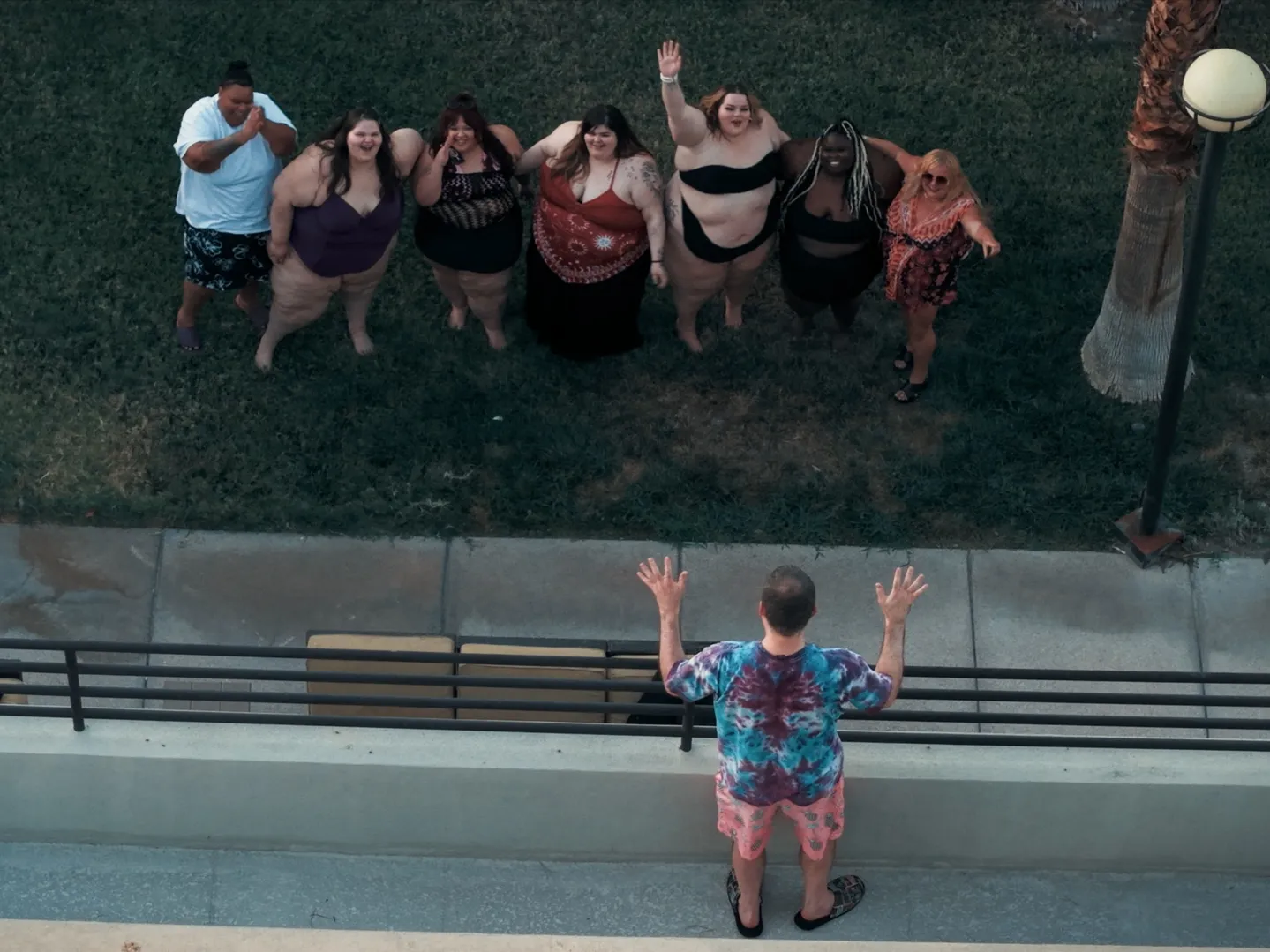
Throughout this documentary, multiple women talk about the ways Stefan used seemingly inconspicuous content that was, in fact, deeply fetish-based, whether that was livestreaming them eating all day, doing taste tests, or trying out different types of furniture. Things that, on the surface, would read as unremarkable to the average person, but to anyone with the fetish, they're pretty obvious. That content served as a funnel, both for anyone who might be interested in watching adult content, and eventually for the women themselves, pulling them into making that type of content too.
I think it's telling that so many of the women who came through this house, either while they were living there or shortly after, became involved in sex work. I don't think sex work itself is suspicious, but I do think it's suspicious that so many of them weren't doing it before they arrived. It's really hard not to wonder what role access, encouragement, or outright pressure from inside the house, and from Stefan himself, played in that shift.
I watched this documentary as someone who knows what it's like to be a fat woman moving through the world, to be told, implicitly and explicitly, that you should be grateful anyone wants you at all, that desire itself is the favor. I saw pieces of myself in these women, in the wanting to be accepted somewhere, in the relief of a place that says none of the usual rules apply to you here.
Stefan, allegedly, uses social media to prey on women, often young women, convincing them that his home is a safe space rather than a fetish zone. It's a distinction many of them don't recognize at first, precisely because of a naivety he exploits. He uses body positive language to seem safe, loving even, accepting, in a world that has isolated so many women from that kind of acceptance because of their fatness. And I think that isolation is common for a lot of fat women.
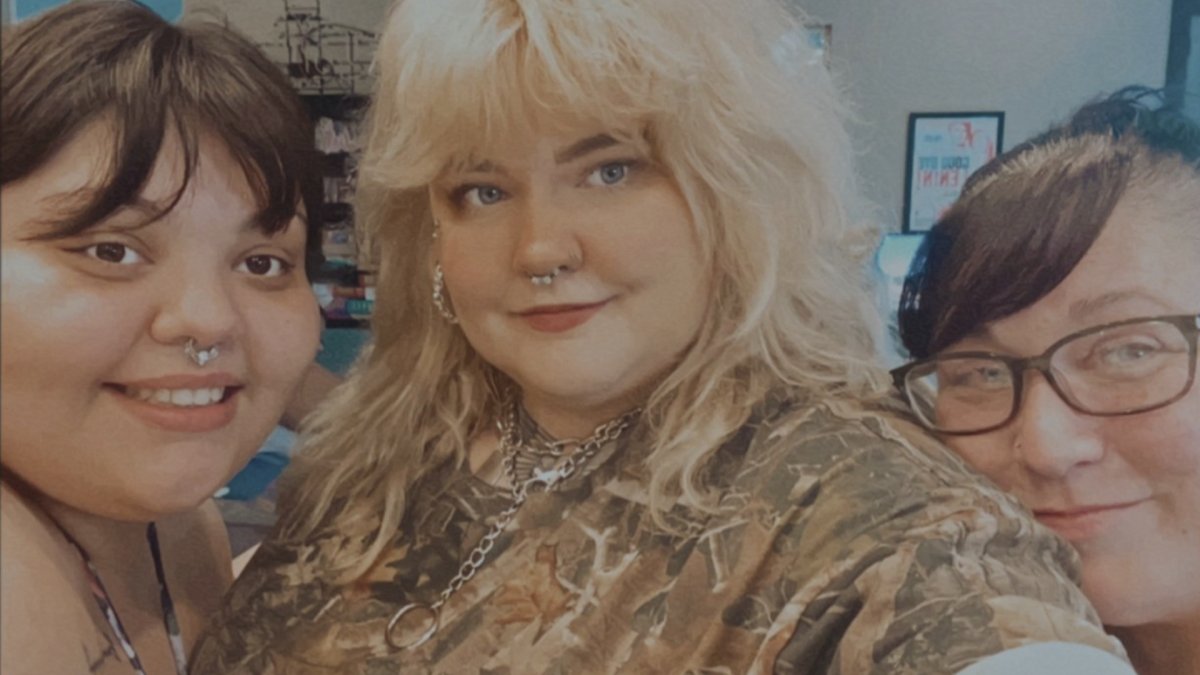
But that acceptance is exactly what got exploited. So many of these women came to Pearadise looking for community and acceptance, and what they found instead is years of trauma, the direct result of how society treats fat people in the first place. They did not deserve what happened to them. What Stefan did was insidious and deeply horrific, and what's hardest to sit with is that he continues on today without much repercussion, seemingly unwilling to acknowledge his role in the deaths of women like Kass and Shay, or in the harm done to other women like Cipreanna, and countless others who have told their stories or have yet to.
I'm sad for fat women who believe this is the best they'll ever be offered, because the world told them so. I'm sad for the victims who have to keep living while justice stays out of reach. I'm sad for the women who feel like there's no way out of whatever they're navigating right now. There is always a way out of the dark, and there is so much more to be deserved.
Like what I have to say? Support me and subscribe to my newsletter.